By Celestine Okafor (Editor-in-Chief)
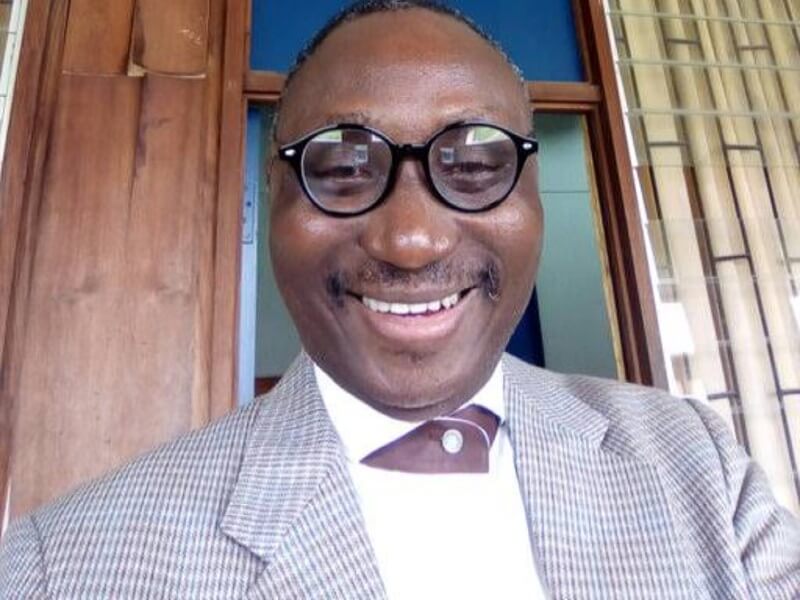
Constitutional lawyer and anti-corruption expert, Dr Adetunji Ojo Ogunyemi, has identified more effective approaches in the Nigeria's vigorous fight against the menace of corruption which has grossly eroded her national development.
Ogunyemi spoke in Abuja at a 3-day training workshop on "Reporting Corruption in Nigeria", which was organized for a select group of Journalists by Konrad Adenauer Stiftung, a European anti-corruption promoter across the globe, in collaboration with the Civil Society Legislative Advocacy Centre (CISLAC) and Transparency International (TI) Nigeria. He said among others, that a thorough restructuring of the nation's Administration of Criminal Justice System would be a game changer in the anti-corruption war. Ogunyemi also recommended that for the fight to achieve its purpose, especially in the current democratic dispensation in Nigeria, there must be deliberate efforts to make political offices financially unattractive.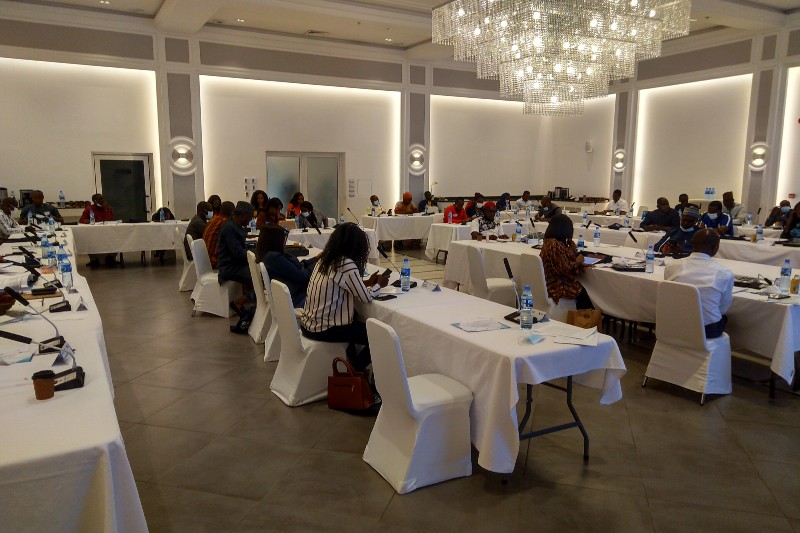 Photo Of The Abuja 3-day Event
Dr Ogunyemi who is also a Historian in the Faculty of Arts at the Obafemi Awolowo University, Ile-Ife, Osun State, posited in his paper presentation during the well organized workshop, that strengthening the Code of Conduct Bureau (CCB) to inquire into and prosecute unexplained wealth by civil servants and other category of public office holders, would substantially curtail corruption in the country. He also recommends that making personal and property tax certification a basis of all social claims is key. The University Don advocated that ensuring that the Report of Public Accounts Committee (PAC) are timeously and regularly published by the National Assembly, would equally help.
Ogunyemi who painstakingly enumerated the evil effects of corruption on Nigeria's development, however, suggested that strengthening the Auditor-General of the Federation and those of the States to apprehend infractions on Public Accounts, would help arrest the growing trend of corruption in Nigeria, just as he canvassed that the said Auditor-General should be a professional appointee by such certified professional bodies and not one from the civil service of the federation or from that of the states.
Ogunyemi who held the workshop participants spell-bound with the incisive logic laced in his presentations, however explained that there are both Economic and Social effects of corruption on the development of any nation. Among the Economic effects, he stated, are mass poverty and inequality; creation of illegal rent and rent-seeking behaviors; diminishing of the capacity of a country to provide basic infrastructure; promotion of unbridled consumption of ostentatious goods and creation of a dysfunctional private-public participation in the economy.
The Social effects of corruption on a nation, Dr Ogunyemi pointed out, are that it creates a culture of impunity; enthrone an unjust social order; precipitates class war and dissent; it, above all, ridicules the judiciary process and compromises political choices.
However, in his first paper presentation topic at the workshop titled: "History of Corruption and it's Effects On National Development" on Day-One of the workshop held at the ornate Ballroom of Fraser Hotels & Suites, Abuja, on Monday November 22, 2021, Dr Ogunyemi explained that the key objectives of his paper were to give a chronological report of the origin of corruption acts in Nigeria; to also show the dimensions of corrupt behavior in the Nigeria's public sector and to highlight the effects of corruption on the development trajectory of the country.
The anti-corruption expert however clarified the basic concepts of corruption to include the application of Public property to private ends without authority; a crime committed against the state and an affront on the law of social order; a social vice that confers some rewards on perpetrators of corruption at the expense of their victims; the vice that grows only in an environment where accountability has failed; a bad culture that can easily be apprehended where government is accountable to the public, and as well as a crime committed not only against the state but also against conscience.
Dr Ogunyemi delved into the various hues and meaning of corruption as captured in the provisions of the Nigerian Criminal Code and Criminal Procedure Act. He said that even scholars and legal pundits in the country discuss corruption side-by-side the idea of accountability and due process of law, citing the cases of Obilade and Braxton, 1994; Shyllon, 1986 and Akinseye George, 2000.
The academic legal luminary contends that though the description of the law Codes of what may be regarded as constituting corrupt acts is not exhaustive, conspicuously missing in such description, he argued, are fraudulent practices such as: the unauthorized virement of funds in the public budget; over-padding of expenditure votes; fraudulent encashment of Cheques; charging of private expenditure to public treasury; outright refusal to answer audit queries on discrepancies in the record of public finances, etc; extra-budgetary expenditure; abuse of office; nepotism; suppression of information on public revenues; electoral fraud, such as over-voting and underage voting; forgery of election result sheets and declaration of an election looser as winner. All these, he argues, are by no means insignificant acts of corruption and criminality.
On whether corruption is indeed a Nigerian disease?, Dr Ogunyemi however disagrees. He contends that it is doubtful whether the cultural and racial explanations offered by some scholars can be sustained in the face of glaring facts and evidences of corruption in every part of the world today (though in varying degrees) and certainly without discrimination as to race. At any rate, he maintains, it is doubtful whether a person is necessarily corrupt because he is African, Nigerian or American, rich or poor.
With Ogunyemi's peculiar tool of analyzing corruption, as indicated in his paper presentation, the legal egghead holds that it is rather more useful to analyze corruption in terms of systematic variables such as the strength/weakness of the legal system; the network and weight of sanctions built up against corrupt acts; the social and political permissiveness of abuse of office and conflicts of interest, as well as the established adjudicatory systems designed to discourage or punish corrupt acts.
He therefore proposed in the thesis of the workshop interaction that weak legal framework such as shown in the Nigerian Audit Acts of 1956 and in many other laws of the federation, make corruption fester in Nigeria. He also proposed that dilatoriness in investigation and prosecution of corrupt acts tend to embolden criminals, just as he said that societal adulation of corrupt behaviors and criminality delimits the capacity of government through its anti-corruption agencies to apprehend thieves. Ogunyemi also upheld that the near absence of moral instructions in schools in Nigeria have all combined to make the problems of corruption intractable in the country.
Dr Ogunyemi who pointed out that corruption occur when values in respect of social norms like honesty, transparency, accountability, prudence, integrity and self-respect are depressed or non-existent, however enumerated the various legal regimes in Nigeria so far against corruption.
These, he said, include the Nigerian Audit Act of 1956: section 15 (5); the Financial (Control and Management) Act, 1958 (CAP F26 LFN 2004); the Code of Conduct Bureau & Tribunal Act, 1991 (CAP C15 LFN, 2004); the Public Accounts Committee Act, 1987 (CAP P35, LFN 2004); the Recovery of Public Property (Special Provisions) Act; the Corrupt Practices and Other Related Offenses Act, 2000; the Economic and Financial Crimes Act, 2004; the Money Laundering (Prohibition) Act, 2011; Dishonoured Cheques Act; the Fiscal Responsibility Act, 2007; the Public Procurement Act, 2007 and the Nigerian Financial Intelligence Unit Regulation, 2015.
Ogunyemi stated that since the post-independent era, successive governments in Nigeria have set up varied Supreme Audit Institutions that were used to tackle the incidences of corruption in the country. These institutions are, the Nigerian Financial Intelligence Unit (NFIU); the Public Accounts Committee (PAC); the Independent Corrupt Practices and Other Related Offenses Commission (ICPC); the Code of Conduct Bureau (CCB); the Budget Office of the Federation (BOF); the Economic and Financial Crimes Commission (EFCC); the Budget Monitoring Pricing and Intelligence Unit (BMPIU); the Nigerian Extractive Industry Transparency Initiative (NEITI) and the Auditor-General for the Federation and for the States (Sec 85 and Sec 125 of the Constitution of the Federal Republic of Nigeria, 1999).
Dr Ogunyemi however attempted to trace the nature of corruption during the pre-colonial and colonial eras as well as its dimensions. He contends that corruption in the pre-colonial times indeed existed, but was not widespread. He said, at the time, basic values of candor, transparency and self-respect still abounded in large measures. Children and the young people among the pre-colonial tribes of Nigeria, were educated to eschew fraudulent conducts and to avoid "spoiling" their family names. As a matter of fact, the sanctity of family names meant all to a man that had integrity. Among the Igbos and Yorubas of Nigeria at the time, for instance, there were this puritanic concept of 'Ezi Afa Ka Ego' (meaning: Good name is better than wealth) and what the Yoruba call 'Omoluabi' (Good name is more valuable).
Ogunyemi posited that during the colonial rule which many Nigerians, of course, did not accept, the British engaged in acts of corruption by fighting to annex territories or take every Nigerian community by sheer brute force. This was evident in the annexation of Lagos in 1861 and in 1903 by the white colonialists during the famous Battle of Burmi. The British, according the scholar, engaged in corrupt acts by their observed fraudulent trade practices, especially as perpetrated by their merchants in the Royal Niger Company and in the Oil Rivers Protectorates. There were also evidences abound where the colonial officers helped themselves to public treasury. This practice further encouraged their subordinate African staff to steal even more.
Dr Ogunyemi however averred that the British acts of theft and pillage manifested in not just fraudulent seizure of lands owned by the native Africans but also artefacts which were stolen from African Shrines and Royal Palaces. He stated that some African scholars have found copious proofs of sleaze committed by different categories of colonial staff, especially during the period of 1861 and 1959 in Nigeria. The dimension of corruption clinically employed during the colonial rule were of two forms: through commercial dealings and fraudulent advertising as they did in the case of promoting their English gin (Schnapps and Brandy) as promoting healthy living, while castigating or classifying those of Africa (popularly known as 'Kai Kai' or 'Sapele Water' in Niger Delta Region) as illicit drink inimical to good health.
The European colonial bureaucrats fostered their acts of corruption through fraud on treasury; by outright embezzlement; forgery and theft; disappearance of vouchers; illegal virement and bureaucratic corruption. According to Ogunyemi, the white colonialist's acts of commercial fraud were also manifest in fraudulent folding of fabrics; in adulteration of liquor; in fraudulent product adverts and weight measurements; in obtaining title of lands by false pretenses, etc. He stated that in reaction to these acts of corrupt practices by the colonialists, Nigerians began to engage in currency counterfeiting; in adulteration of export produce/crops; in tax evasion; in smuggling; in burgling of European stores; in absenteeism especially from work and in theft in native treasuries, etc.
Dr Ogunyemi however observed with that the dawn of independence and the enthronement of the post-independent indigenous governments, corruption grew in great leap. He revealed that during this period, notable corrupt acts continued. The perpetrators, he claimed, were mostly politicians whose acts were ascribed as merely the abuse of office rather than describing it as clear theft. Ogunyemi also blamed the Nigerian military who took over power in spate of military coups of elevating corruption to the level of a national worship. Some of the Army Officers, he stated, were caught and disciplined by the apex military authorities. He mentioned about ten cases of military officers of the position of military governors across the states of the federation at the time who were publicly indicted of corruption.
Ogunyemi noted that the dimension of corruption during the post-independent period of military rule particularly between 1984 and 1999 was manifest in Extra-budgetary expenditure; in Embezzlement (the Dr Pius Okigbo Panel Report on Öil Windfall for instance); in Contract Splitting and Over-invoicing; in the Failed Contracts of the defunct Nigerian Airways; in Outright Theft (example of the Abacha loot); in illegal virement; in oil licence rigging and condonation of oil bunkering, among others. In the post-independent civilian regimes, corruption, Ogunyemi said, was carried out through contract splitting; through budget padding; through ghost workers syndrome as revealed in the Steve Oronsaye's Report; through gross abuse of office; through conflicts of interest; through currency round-tripping; through import waiver fraud; through procured judgement debt against Nigeria (like the P&ID saga) and through fraudulent consultancy payments. NNL.