

(A NewsLeader Editorial, Sunday, October 4, 2026)
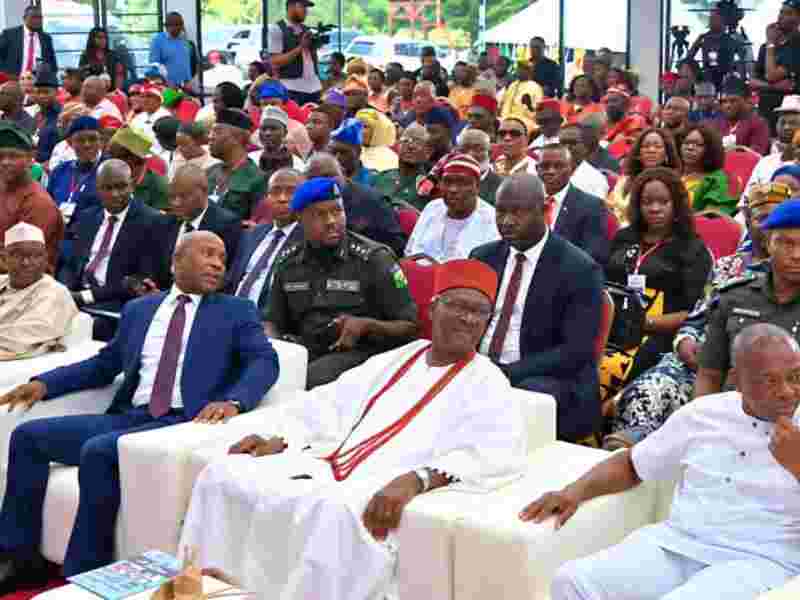
Today, Sunday, October 4, 2026, is exactly one week after the Nigeria media editors left Enugu following the formal conclusion of the 22nd Edition of the All Nigeria Editors Conference (ANEC 2026) held last week in the Coal City state.
The successful annual event has, once again, brought the Nigerian media’s attention to one of the most consequential questions facing the country: Can Nigeria conduct a credible, transparent and genuinely voter-driven election in 2027?
The choice of theme — “The Ballot, the Media and the Task of Keeping Democracy Alive” — was appropriate. Its sub-theme, “When Lies Look Real: Detecting and Debunking AI Disinformation Before, During and After Election,” was equally timely in an age when artificial intelligence, deepfakes, cloned voices and fabricated documents can be deployed to deceive millions of voters within minutes. More than 300 editors, publishers and senior media practitioners participated in the conference.
The conference produced several important observations. It warned about declining voter confidence, voter apathy, electoral violence, institutional weaknesses, questionable judicial interventions and the danger of unverified election results. It also urged newsrooms to institutionalise fact-checking and digital verification, and reaffirmed the Nigerian Media Code of Election Coverage as a professional standard for the 2027 elections.
These are worthy positions. But Nigeria has heard many worthy positions before. The real question is what happens after the media chieftain's communiqué?
For more than two decades, ANEC has provided an important national platform through which editors examine the state of the nation. The conference itself dates back to 2004, in Ede, Osun state, during the Guild's Exco led by its former President and General Secretary, Hon. Baba Dantiye and Ms Angela Agoawike, the founding Chief Executive Officer of Owerri- based OMALICHA FM Radio Station. Ever since, successive editions have addressed elections, democratic governance, national cohesion, press freedom, media sustainability, insecurity and the economy.
The 18th ANEC in Owerri, Imo state capital in 2022, for instance, called on editors to put political actors on their toes, demand issue-based campaigns and properly scrutinise candidates so that voters could make informed choices.
In 2024, in Yenagoa, Bayelsa state capital, the editors, again, made recommendations on economic hardship, media sustainability, journalist safety and restrictive laws affecting the press. The Guild even resolved to compile anti-media laws and forward them to the National Assembly for possible repeal or amendment.
At the 2025 ANEC in FCT Abuja, the Guild returned to democratic governance and national cohesion, with electoral integrity and the 2027 trust deficit prominently featuring in its deliberations. The NGE leadership pledged that editors would contribute to credible elections, national dialogue, peace-building and accountable governance.
And now, in 2026 in Enugu, the same fundamental concerns have resurfaced.
This suggests that the problem is no longer a shortage of resolutions. It is the gap between resolutions and sustained intervention.
The NGE occupies a special position in Nigerian public life. Editors are not merely newsroom administrators. Collectively, they determine what the public sees, what receives sustained scrutiny and which national questions remain in the public consciousness. That gives the Guild considerable agenda-setting power.
But that power must be converted from annual conference declarations into continuous national engagement.
If the NGE says that political actors must be subjected to scrutiny, editors should begin that scrutiny long before election day. Candidates and political parties should be required to answer, repeatedly and publicly, questions about their records, programmes, sources of campaign finance, promises, constitutional commitments and previous positions.
If the Guild demands credible elections, it should monitor the entire electoral chain — voter registration, party primaries, campaign finance, nomination processes, security arrangements, election technology, voting, collation, declaration of results and election litigation. If it condemns misinformation, the Guild should help build a permanent, professionally independent election fact-checking network involving newspapers, radio, television and credible digital platforms. And if it insists that the ballot must prevail, editors must themselves refuse to become instruments through which political parties manufacture public opinion.
This is where the NGE must examine itself.
There is a danger that annual conferences can become rituals of national lamentation: distinguished speakers make compelling speeches, delegates applaud, a communiqué is issued, photographs are taken, and the national conversation gradually moves on until another crisis produces another conference. That cycle must change, now!
The 2026 communiqué itself contains the ingredients for a more interventionist NGE. It calls for fact-checking, responsible election reporting, rejection of unverified results and cooperation among the media, INEC, security agencies, judiciary, political parties, civil society, technology platforms and citizens.
The Guild should now create a mechanism for measuring compliance with those commitments.
OUR 9-POINT SUGGESTIONS FOR NGE'S CONSIDERATION
First, the Guild could publish periodic NGE Democracy and Election Accountability Reports, beginning immediately. Such reports should document whether political parties are obeying campaign rules, whether candidates are spreading demonstrably false information, whether journalists are being harassed, whether security agencies are acting impartially, whether INEC is meeting its obligations and whether the courts are resolving electoral disputes within the spirit of electoral justice.
Second, the Guild should also resist the temptation to be excessively deferential to whoever happens to control political power. The media's constitutional responsibility is to hold government accountable, while maintaining accuracy, fairness and independence. The NGE itself has recently raised concerns about journalist harassment and the use of cybercrime laws in ways that could restrict legitimate journalism. Equally important, is that editors must scrutinise themselves.
Third, a credible election cannot be supported by media organisations that publish sensational allegations without verification, accept political patronage without critical thought, allow partisan interests to dictate headlines or give disproportionate publicity to politicians because of their financial influence.
Fourth, the NGE therefore needs a stronger internal culture of accountability. Its members should agree that election reporting will be driven by evidence rather than access, money or political proximity.
Fifth, the threat from artificial intelligence makes this imperative. At ANEC 2026, INEC warned editors about fabricated videos, cloned voices, forged documents and manipulated result sheets. The commission urged the media not to sacrifice accuracy for speed.
Sixth, the editors should go further. Every major newsroom should have a designated election verification desk before the 2027 polls. No purported result, viral video, quotation, document or audio recording capable of influencing voters should enter mainstream news without appropriate verification.
Seventh, there is also a larger question. What kind of democracy is Nigeria trying to preserve? Credible elections are not simply about producing winners and losers. They are about ensuring that citizens believe their votes matter.
At ANEC, Prof. Auwalu Yadudu drew attention to voter apathy and public perceptions that judicial decisions can sometimes displace electoral outcomes.
Cardinal John Onaiyekan similarly stressed that democracy requires more than elections; it requires institutions and citizens committed to democratic values.
Eighth, the NGE should therefore make 2027 a long-term civic journalism project, not merely an election-season assignment. The Guild should engage INEC, political parties, the judiciary, security agencies, civil society organisations, technology companies and citizens continuously. It should demand answers, publish findings and return to unanswered questions until they are addressed.
Ninth, most importantly, it must remain pro-Nigeria, pro-ballot and pro-people, not pro-party, as its Enugu communiqué appropriately reaffirmed. ANEC 2026 has provided the warning. Nigeria's previous elections have provided the evidence. The 2027 election will provide the test.
The Nigerian Guild of Editors (NGE) has earned a significant platform in the nation's democratic conversation. The challenge now is to ensure that its resolutions do not become archival documents. The time has come for the editors to move from annual declarations to permanent democratic vigilance.
Nigeria does not need another beautiful communiqué after 2027. It needs editors who, before, during and after the election, will ask difficult questions, expose falsehood, defend facts, protect citizens' right to know, and insist that the ballot remains the authentic expression of the people's will. That should be the enduring measure of ANEC 2026. NNL.