
(A NewsLeader Editorial, Friday, October 2, 2026)
President Bola Ahmed Tinubu’s Independence Day declaration that Nigeria has passed through its “own Red Sea” and is now entering an “age of prosperity” is an ambitious claim. It deserves neither automatic applause nor a scoffing dismissal. Instead, it deserves the harder test of evidence.
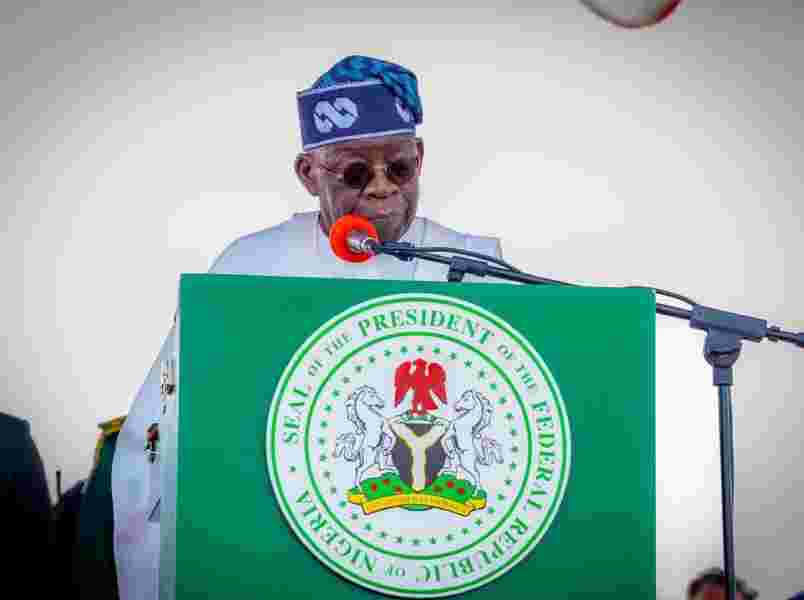
In his Thursday's October 1, 2026 address, President Tinubu argued that the painful reforms undertaken since 2023 have corrected Nigeria’s economic direction and laid the foundation for prosperity. The Presidency points to the removal of petrol subsidy, foreign-exchange reform, tax reform, improved reserves, stronger revenue mobilisation and other measures as evidence that Nigeria has moved from an “age of reform” to an “age of prosperity.”
There is indeed evidence that some of these measures have produced important macroeconomic improvements. The International Monetary Fund (IMF) says the ending of fuel subsidies and deficit monetisation, tighter monetary policy and exchange-rate liberalisation have reduced fiscal vulnerabilities, improved foreign-exchange market functioning and rebuilt external buffers. Nigeria's gross international reserves rose from about $40 billion at the end of 2024 to $46 billion in 2025.
But macroeconomic stabilisation is not the same thing as economic transformation.
This is where the Tinubu reform narrative must be subjected to its most serious examination.
Reform must ultimately be measured by the lives of citizens A genuine economic reform programme is not simply one that removes distortions, floats a currency, raises taxes or eliminates subsidies. Those are instruments. The ultimate purpose of reform is to create an economy capable of producing more, employing more people, reducing poverty, strengthening institutions, attracting investment and delivering a steadily improving standard of living.
By that broader definition, the Tinubu reforms are still a work in progress. The World Bank also says Nigeria has made meaningful progress in restoring macroeconomic stability, with inflation easing, external and fiscal positions strengthening and growth remaining robust. But it equally warns that household incomes have not recovered fully and poverty remains high.
The IMF's June 2026 assessment is even more instructive. It estimated Nigeria's real Gross Domestic Product (GDP) growth at 4 per cent in 2025 and projected 4.1 per cent for 2026, while reporting that poverty had reached 63 per cent at the national poverty line and that an estimated 27 million Nigerians faced food insecurity in late 2025.
These figures do not invalidate the reforms. They demonstrate the central difficulty which is that Nigeria has achieved some stabilisation without yet achieving sufficiently broad-based prosperity. That distinction is crucial.
Fuel subsidy reform is a necessary reform, but it comes with questionable transmission of its benefits The removal of the petrol subsidy was arguably the most dramatic of the Tinubu administration's economic decisions. There was a legitimate economic case for ending a system that consumed enormous public resources, encouraged arbitrage and smuggling and distorted the petroleum market. International financial institutions have recognised the reform as an important step towards fiscal sustainability.
But the real question is no longer whether subsidy reform was necessary. The question is what Nigeria has done with the savings.
And here, the government has a difficult accountability problem.
The IMF estimated that the savings from the completion of fuel-subsidy removal could amount to as much as 2 per cent of GDP, but said those savings did not appear to have accrued to the budget in 2025. It also identified significant off-budget spending and noted that a Central Bank of Nigeria (CBN) deposit drawdown equivalent to 1.1 per cent of GDP had a liquidity impact similar to the old “Ways and Means” financing.
In July this year, just about two months ago, the former Finance Minister, Mr Wale Edun reportedly said much of the financial benefit of subsidy removal and foreign-exchange reform had been absorbed by higher debt-servicing costs and increased government expenditure. This is precisely where reform can lose its moral force.
If Nigerians surrender an expensive subsidy but cannot clearly see the corresponding investment in mass transportation, electricity, healthcare, education, productive infrastructure, agriculture, social protection and jobs, they are entitled to ask: where did the sacrifice go?
A subsidy that is removed should ideally be replaced by a more efficient social and economic dividend, not simply absorbed by another expenditure category. The debt question actually cannot be ignored because
Nigeria's borrowing under the reform administration also deserves closer scrutiny.
The Debt Management Office reported total public debt of about ₦166.79 trillion ($120.93 billion) as at June 30, 2026, comprising about ₦75.20 trillion in external debt and ₦91.59 trillion in domestic debt.
Debt itself is not necessarily bad. A developing country may borrow to build railways, power infrastructure, ports, irrigation systems, industrial facilities, universities, hospitals and other assets capable of generating future economic returns. The problem, indeed, is borrowing without sufficient productive transformation.
The IMF estimates that Federal Government interest payments consumed about 53.7 per cent of FGN revenue in 2026, compared with 40.8 per cent in 2024. It has also raised concerns about off-budget expenditure, complex financing instruments and the need for stronger fiscal transparency and risk management. The proposed $5 billion financing arrangement with First Abu Dhabi Bank has also attracted IMF concern over the complexity and potential opacity of such financing structures.
This newspaper, the NIGERIAN NEWSLEADER, therefore believes that the Tinubu administration must answer a simple question: Is Nigeria borrowing its way out of its crisis or borrowing to postpone the consequences of the crisis? The answer must come from what the borrowed money produces.
In truth, monetary reform has brought gains but at a cost. The CBN's exchange rate reforms and tighter monetary policy have helped reduce some of the distortions associated with multiple exchange rates and excessive monetary accommodation. The IMF credits the policy combination with improved foreign-exchange functioning and stronger external buffers.
But tight monetary policy also has consequences. Expensive credit can discourage investment, particularly for small businesses and manufacturers. If inflation remains elevated and productive credit remains expensive, stabilisation can become a painful holding pattern rather than the beginning of an investment-led expansion.
The challenge for the CBN, therefore, is to move from simply fighting inflation to creating the monetary conditions in which businesses can plan, invest, employ workers and expand production without returning to the monetary indiscipline of the past.
Where Tinubu's reform programme deserves recognition is the fact that the administration has confronted some structural problems that previous governments repeatedly postponed. Petrol subsidy removal, exchange-rate reform, tax modernisation and the effort to end deficit monetisation are significant policy departures.
Nigeria's external reserves have improved, foreign exchange market functioning has strengthened, and international institutions acknowledge greater macroeconomic resilience. The new tax framework, if efficiently and fairly administered, could also help address one of Nigeria's oldest problems which is an exceptionally weak revenue base relative to the size of the economy.
The administration has also placed greater emphasis on domestic refining, infrastructure financing, education financing and targeted credit schemes. These are potentially important building blocks. But building blocks are not yet a building.
The missing half of the reform is that it must now move decisively from stabilisation to production. That means electricity that works; roads and railways that reduce the cost of moving goods; ports that facilitate trade; agriculture that feeds the population and generates exports; manufacturing that creates jobs; technology that improves productivity; schools that produce employable citizens; hospitals that protect human capital; and security that allows farmers, traders and investors to operate.
The IMF has itself identified governance, security, electricity, agriculture, infrastructure and human capital as priority areas for inclusive growth. This is the real test of whether the “age of prosperity” has begun.
Nigeria cannot consume its way into prosperity. It cannot borrow its way into prosperity and cannot tax its way into prosperity, nor can it simply devalue or float its way into prosperity. Prosperity must ultimately be produced.
There is another issue that cannot simply be wished away, which is the controversy surrounding President Tinubu's past in the United States and the forfeiture of $460,000 in 1993. In as much as President Tinubu cannot be described by this editorial as having a “criminal record” on the basis of that matter, the current US litigation concerns access to historical government records under the Freedom of Information Act, and the Presidency maintains that it is a civil records-disclosure matter rather than a criminal prosecution or conviction.
Reports concerning the historical forfeiture say the funds were linked by American authorities to narcotics trafficking, while the records themselves remain subject to legal restrictions and disputes over disclosure.
That distinction matters.
Nevertheless, questions surrounding the history and transparency of a sitting president can have political and institutional consequences. A government asking citizens and investors to make sacrifices must command a high degree of public confidence. Transparency, therefore, should not be treated as an inconvenience; it is part of economic reform itself. That is the raw truth!
The appropriate response is full lawful disclosure of relevant public records, respect for due process and a willingness to allow established facts, not political propaganda, to settle historical controversies.
The question: Can Tinubu's reforms salvage Nigeria? The evidence available as Nigeria turns 66 years of it's independence does not justify declaring either success or failure.
It shows something more complicated.
Tinubu's reforms have changed important economic rules and have produced measurable macroeconomic gains. But they have not yet translated those gains sufficiently into improved living standards for the majority of Nigerians. That is the unfinished business.
The administration should therefore resist the temptation to declare the reform journey completed merely because the most painful initial measures have been implemented.
The next phase of the reform must be judged by different indicators like falling poverty, declining food prices, reliable electricity, cheaper credit, higher real wages, productive employment, stronger manufacturing, increased agricultural output, improved schools and hospitals, lower debt service pressure and transparent use of public resources.
If the government achieves these, history will regard the painful reforms of 2023–2026 as the necessary foundation for transformation.
If it fails to do so, Nigerians may reasonably conclude that the country crossed the “Red Sea” only to discover that the promised Promised Land was still beyond reach.
OUR POSITION
NIGERIAN NEWSLEADER Newspaper believes that the country needed serious economic reform. The country could not indefinitely sustain petrol subsidies, exchange-rate distortions, deficit financing and weak revenue mobilisation. But reform must have a destination. That destination cannot merely be healthier government balance sheets or better approval from international financial institutions. It must be a healthier Nigerian society.
President Tinubu's “age of prosperity” must therefore become more than a presidential declaration. It must become measurable reality. The Federal Government should publish a transparent account showing precisely how subsidy savings have been deployed. It should equally disclose the full fiscal implications of major borrowing arrangements; strengthen parliamentary and public oversight of off-budget spending; reduce wasteful expenditure; protect the poorest through properly targeted social protection; and direct a much larger proportion of national resources into productive infrastructure and human capital.
The government must also demonstrate that borrowing is producing assets and economic capacity rather than merely financing recurrent consumption and debt-service obligations.
Above all, the administration must understand that economic reform without institutional reform is incomplete. Nigeria needs stronger accountability, credible statistics, transparent procurement, independent oversight, predictable taxation, rule of law and institutions that survive individual presidents.
President Tinubu may be right that Nigeria has passed through an exceptionally difficult phase. But the country has not yet reached the prosperity he promised. The journey from reform to prosperity is not completed by announcing its arrival. It is completed when the ordinary Nigerian can feel it in the price of food, the availability of electricity, the security of the streets, the quality of schools and hospitals, the availability of jobs, the value of wages and the dignity with which citizens are able to live. That is the real Red Sea crossing. And that is the test history will ultimately apply to the Tinubu reform programme.
The strongest factual caution is the treatment of the “criminal record” issue. The available evidence supports describing it as a contested historical US forfeiture and records disclosure controversy, not as an established criminal conviction. The fiscal criticism is more firmly grounded. The IMF has specifically identified difficulties in tracing subsidy savings, off-budget spending, CBN drawdowns and very high interest costs. NNL.