

By Celestine Osondu Okafor (Editor-in-chief)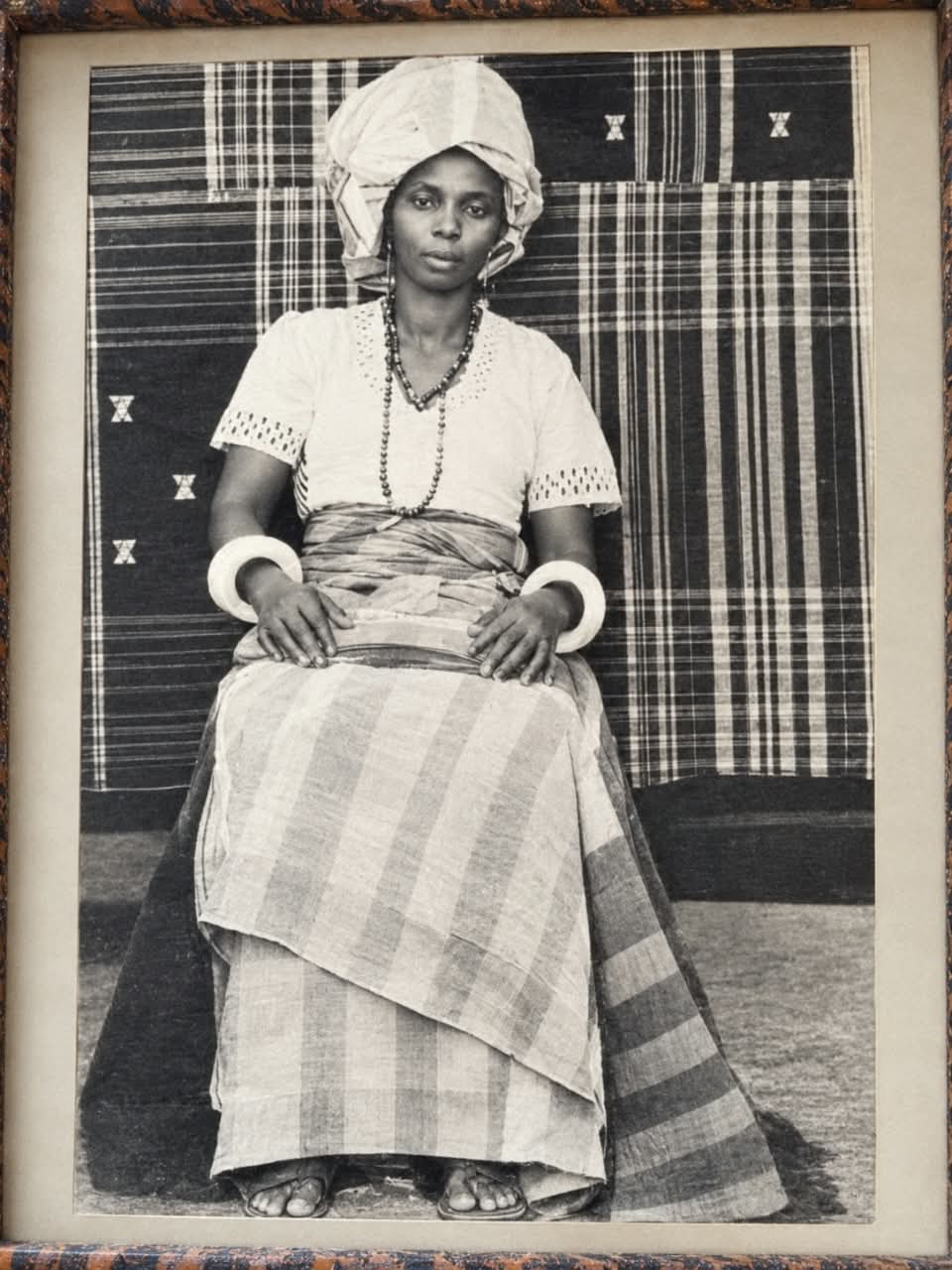
Chief (Mrs) Uzonta Nwande Onyia (maternal grandmother of the writer)
Long before the modern Nigerian state drew administrative boundaries across the landscape of Enugu state, before the coming of Christianity and Western education, and before the automobile and motorbike transport replaced the long walking journeys between villages, the people of Ozalla town in Nkanu west Local Government Area of Enugu state, had already developed a remarkably organised social and spiritual system.
At the heart of that ancient world was the land. The land was not merely where people built their houses or planted their yams and farm crop harvests. It was the source of life, identity, ancestry, morality and communal belonging. It was therefore not surprising that the people developed trado-cultural ceremonies through which they renewed their relationship with the earth, their ancestors and the generations yet unborn.
Among the traditional ceremonies remembered in Ozalla in the age-long years, is the celebratory practice of "Iri Ani" and "Ndee Ngwu" local festivals. And drawing from childhood memories of regular summer holidays in the village in the late 70s with Umuikeowo, Obe-born beloved maternal grandmother of blessed memory, Chief (Mrs) Uzonta Nwande Onyia of Ndiagbo kindred quarters of Ishi-Ozalla, these two celebrations occupy an important place in the cultural memory of the entire Ozalla five autonomous communities of the present times.
They are more than festivals in the modern sense of colourful gatherings, dancing, feasting and entertainment in Ozalla. They belong to an older conception of society in which the living, the dead, the land and the unborn children, were regarded as parts of one continuing community.
OZALLA: A PEOPLE WITH A DEEP MEMORY
Ozalla, known traditionally by many of its indigenes as Ozara, is one of the historic communities of Nkanu West Local Government Area of Enugu State, South East, Nigeria. Ancient historical accounts describe Ozalla town presently made up of five autonomous entities in what looks like an administrative gerrymandering of 2002, as: Ishi-Ozalla, Umuokoruba-Ozalla, Umuohanee-Ozalla, Etiti-Ozalla and Obeagwu-Ozalla as an old Nkanu settlement. The history account also record the town's tradition of migration from Okpatu centuries ago, in the present Udi axis of Enugu west, to its present location.
Ozalla town subsequently developed into a substantial settlement with several villages and kindreds. Before the creation of the present autonomous communities, Ozalla functioned as a single traditional entity. In 2002, it was divided administratively into existing five autonomous communities. But political and administrative boundaries could not erase the older cultural memory. Indeed, the very survival of ceremonies such as "Iri Ani" demonstrates how communities preserve their identity even after political structures change.
WHEN THE LAND WAS SACRED
To understand "Iri Ani" festival of Ozalla, one must first understand the traditional Igbo relationship with Ani, the earth.
In the traditional Igbo worldview, the earth was both a physical territory and a sacred moral institution. Farming was therefore not simply an economic activity. The farmer entered into a relationship with the earth (the Ani), and the farm harvest represented the reward for the farmer's labour as well as a blessing that demanded gratitude.
Research on customs in Enugu State specifically identifies Oriri-Ani, or the soil/earth festival, among traditional practices of the people, alongside Iriji or Iwaji, masquerade traditions, age-grade institutions and other ceremonies. One academic study notes that "Iri Ani" as known in Ozalla town or Oriri-Ani traditionally involved a period during which farming was suspended for a traditional week.
Across Nkanu land in Enugu East Senatorial/geo-political Zone, the agricultural calendar similarly gave special significance to the period between planting and harvest. The New Yam Festival, often associated with Iri Ji, Iwa Ji or Iri Ani or Oriri Ani, marks the transition from the farming season into harvest and thanksgiving period. It was within this larger cultural universe that Ozalla's own traditional observances "Iri Ani" and the "Ndee Ngwu" festivals acquired their particular local character.
"IRI ANI": A THANKSGIVING TO THE EARTH
The expression "Iri Ani" carries a profound cultural meaning. Literally understood within the Igbo worldview, it connects eating or communal consumption with "Ani" (the earth). It represents the principle that what the earth produces cannot be consumed without an acknowledgement of the source of life.
For the traditional Ozalla society, therefore, "Iri Ani" was not merely about food. It was about gratitude, and about acknowledging that the community had survived another agricultural cycle. It was also about thanking the earth for its fertility, and about remembering the town's benevolent ancestors who cleared the farm bushes or the forests, cultivated the land and established the settlements inherited by their descendants.
And, perhaps most importantly, the "Iri Ani" was about renewing the social compact between the individual and the community.
The traditional farmer did not see himself as an isolated economic actor. His farm was connected to his family, his kindred, his village and the larger community. That philosophy explains why agricultural festivals throughout Igboland traditionally combined ritual observance with communal feasting, music, dancing, reconciliation and social interaction.
THE OZALLA TRADO-CULTURAL PRACTICE OF "IRI ANI": MORE THAN A HARVEST FESTIVAL
Modern generations sometimes look at traditional festivals principally through the spectacles of entertainment. But ancient festivals served many purposes simultaneously. They were religious and were social. They were political, too and were economic. They were educational, and
were also historical. A young Ozalla child watching elders perform the rituals was learning, perhaps without a formal classroom, who the people were, where they came from, what they valued and what behaviour the community expected.
The festival became a living textbook, and the songs preserved history. The proverbs preserved philosophy, and the dances preserved memory. The elders preserved interpretation, and the food preserved the agricultural identity of the people. While the "Iri Ani" gathering itself preserved community.
THE SHADOW OF THE OZALLA ANCESTORS
Traditional Ozalla society, like many Igbo communities, did not draw the sharp boundary between the living and the dead that dominates much of modern Western thinking. The Ozalla ancestors remained part of the moral universe. They were remembered during important communal occasions, and their names, achievements and relationships were transmitted from one generation to another. This explains why traditional ceremonies could simultaneously celebrate the present harvest and remember the past. For instance, a yam harvested today could be regarded as part of a chain that began with an ancestor who first cultivated the land generations earlier.
The festival consequently became a meeting point between generations. The dead were remembered and the living celebrated. The young watched and the future inherited the memory.
"NDEE NGWU" FESTIVAL: THE STORY OF A PEOPLE
If the Ozalla major traditional festival of "Iri Ani" speaks principally to the people's relationship with the earth, the festival of "Ndee Ngwu" opens another window into Ozalla's historical identity. The word "Ngwu" appears, perhaps, deeply embedded in the oral history of Ishi-Ozalla Autonomous entity in particular. Right or wrong?
However, modern accounts concerning the community's history and especially as told by venerated grandmama (Chief Mrs Uzonta Nwande Onyia) during those summer time vacation days of yore in Ishi-Ozalla village, infact, record different oral traditions about the early inhabitants, ancestry and settlement of the area.
A 2024 report documented a serious community debate over aspects of Ozalla's history, including the ancestry of Edeaniagu, Ani Nwangwu and the meaning of Ngwu within the town's/community's historical narrative. Another recent review on Ishi-Ozalla Community, describes Umungwu as an old custodial lineage associated in oral tradition with the community's culture, sacred space and access to its deity and forest.
These accounts, as a matter of facts, should be approached as oral histories and contested community narratives, rather than as settled archaeological fact. That distinction is important.
Traditional history is frequently transmitted orally in Igbo communities. Names, genealogies, migration routes, places and ritual responsibilities may survive for centuries in family memories even where written documentation is absent. The "Ndee Ngwu" festival should therefore be understood within that broader Ozalla tradition of ancestral remembrance and communal identity.
A CEREMONY OF IDENTITY
The deeper significance of the local emume "Ndee Ngwu" lies in the question it poses:
Who are we? For an ancient community, identity was never simply a matter of possessing a modern identity card or belonging to a local government area. It was a matter of ancestry and a matter of land, a matter of kindred, a matter of obligations inherited from one's forefathers. It was also a matter of responsibility to descendants.
That is why ceremonies associated with ancestral lineages were so important.
They reminded people that nobody was an isolated individual. Everyone belonged somewhere and had ancestors, had obligations. And everyone was expected to leave something behind for those coming after them.
THE SACRED LANDSCAPE OF OZALLA
The physical landscape of Ozalla reinforces this historical consciousness. One of the most frequently mentioned cultural landmarks is the Ufam or Ufamu River, associated in local tradition with the spiritual life of the community. Nigerian NewsLeader Newspaper's earlier historical account of Ozalla town documented the Ufamu river and the traditional belief surrounding the Oji-Ngene-Ani area and its crocodiles. The existence of such sacred landscapes demonstrates the old Ozalla understanding that certain rivers, forests, groves and areas of land were not simply geographical locations. They were repositories of memory.
They were places where the community encountered the invisible world. And also places where successive generations could physically encounter evidence of the traditions their ancestors left behind.
FROM ANCIENT RITES TO MODERN OZALLA
When Christianity came to Ozalla in the colonial times, western education also came with it, as it did in most or many Nigerian and continental African societies. The colonial administration gave in to the nationalist's agitation for political independence. The modern local governments were created, so also the creation of autonomous communities as in the present day Ozalla urban town. Each historical development changed Ozalla. But none completely destroyed its traditional memory. Indeed, the community continues to maintain traditional institutions.
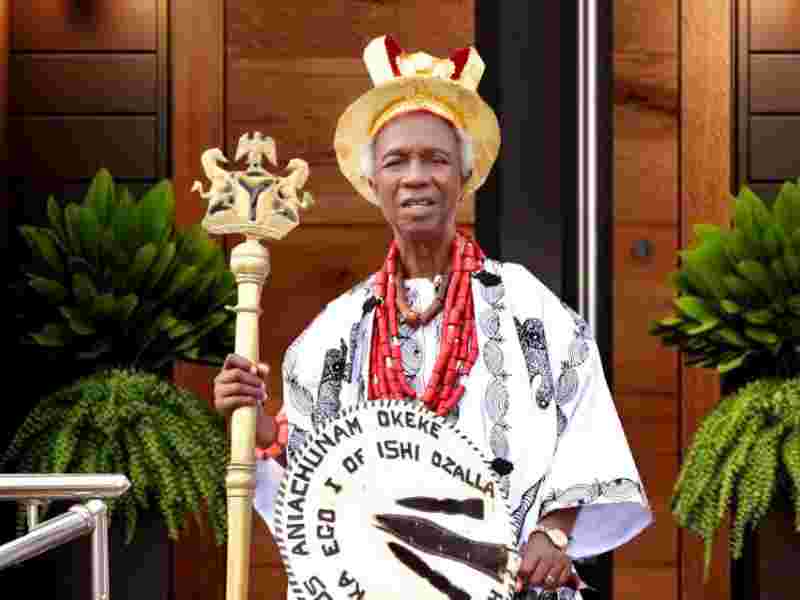
For example, the Ishi-Ozalla traditional institution headed by its current royal potentate, His Royal Highness Igwe Sylvanus Aniachunam Okeke, the Eze 'Eziafakaego' and the Ishi 1 of Ishi-Ozalla, remains active, with the community's modern Ofala ceremonies explicitly presented as occasions for showcasing its traditional and cultural values. This is significant. A society does not necessarily preserve its identity by refusing to change. It does only by
determining what must change and what must not be forgotten.
CHRISTIANITY AND THE OLD TRADITION
One of the most interesting dimensions of Ozalla's cultural history is the encounter between Christianity and traditional beliefs.
Christianity introduced a new religious vocabulary and transformed the spiritual lives of many people of the town. But traditional customs did not simply disappear overnight. Some were abandoned and some modified. Some became purely cultural rather than religious. Others survived in family and community memories. This pattern is not unique to Ozalla. It occurred throughout Igboland. The result today is a complex cultural environment in which a modern Ozalla citizen may be simultaneously Christian, professionally educated, urbanised and technologically connected, while still regarding the traditions of his or her ancestors as an important component of identity.
THE "NDEE NGWU" FESTIVAL AS A COMMUNITY ASSEMBLY IN OZALLA
There is another reason why the "Iri Ani" and "Ndee Ngwu" festivals matter. The occasions bring community people and off-shore resident citizens home, whether they are businessmen and women, civil servants, students, professional living in cities of Enugu, Onitsha, Aba, Okigwe, Owerri, Sapele, Warri, Asaba, Benin-city, Lagos, Abuja or Portharcourt, Kano and other northern cities called "Ugwu Awusa". The Ozalla indigene living abroad also returns during such occasions. Even the family that has been separated by work and distance meets again to celebrate "Iri Ani" and "Ndee Ngwu" festivals. The festival consequently becomes an informal homecoming institution.
In this respect, its social importance may be even greater today than in the past.
Modern migration has scattered Nigerian families across the country and around the world. Traditional festivals, not only Christmas and New Year celebrations, provide one of the remaining opportunities for people to reconnect with the village of their ancestors like Ozalla town.
THE YOUNG GENERATION OF OZALLA AND THE DANGER OF CULTURAL AMNESIA
In the circumstance of the present day Ozalla town, a serious danger looms. This is because a tradition can survive physically while dying intellectually. A young person may participate in a festival without knowing what it means. The drums, dancing, colourful clothes and food may remain, but if the story behind them disappears, the culture becomes a performance without memory.
That is why Ozalla's traditional ceremonies require documentation. The community must record the oral histories of its oldest men and women. Names of custodians should be documented. Traditional songs should be preserved. Genealogies should be carefully recorded. Photographs, audio recordings and documentary films should be produced.
Researchers from universities should be encouraged to study the festivals. Schools in Ozalla should teach children about the history and cultural meaning of the town. And where traditional rites contain practices that conflict with modern law, human dignity or public health, such practices should be discarded without destroying the cultural identity surrounding the festival.
CULTURE AS TOURISM AND DEVELOPMENT
There is also an economic opportunity.
Ozalla's cultural heritage, including its traditional institutions, sacred landscapes, festivals, food, music and oral history, could become part of a carefully developed cultural-tourism programme. This should not mean commercialising sacred traditions.
Rather, the community can determine what may be publicly displayed and what should remain restricted to traditional custodians.
Museums, cultural centres, documentary projects and annual cultural festivals could provide employment opportunities for young people while attracting visitors interested in the history of Nkanu and Enugu State. The nearby Centre for Memories in Enugu, for example, demonstrates the broader value of preserving historical memory through dedicated cultural institutions.
THE MEANING OF OZALLA'S TRADITION TODAY
The real question, therefore, is not whether Ozalla should return to the past. It cannot, and it should not. The question is whether a modern society can move forward without abandoning the memory that made it possible. Therefore the ancient Ozalla festivals of "Iri Ani" and "Ndee Ngwu" reminds the people of their relationship with the land. The "Ndee Ngwu" ceremony connects the present with ancestral identity and historical memory.
Together, they represent a philosophy that modern society badly needs, which is that development without memory can become rootlessness, while tradition without adaptation can become stagnation. Ozalla town stands between the two. Its sons and daughters are now prominent, successful and distinguished professional - Engineers, doctors, lawyers, journalists, literary writers, academics, merchant businessmen and women, bankers, top uniformed officers, politicians, civil servants, industrialists, top governmental administrators and other high-heeled professionals scattered across Nigeria and the world.
Yet beneath the modern occupations lies an older identity of a people who cultivated the soil, organised themselves into communities, honoured their ancestors and developed ceremonies through which one generation handed its memory to another.
PRESERVING THE OZALLA FESTIVAL FIRE
This preservation responsibility now belongs to the present generation of Ozalla town. The elders are the institutional libraries. The traditional rulers are custodians, while the umbrella town unions and clubs like the Ozalla Development Union (ODU), the old Ozalla Youths Social Club (OYSC), the Mmuta Amaka Social Club (MASC), the old Ozalla women's club (Ugwu Di Ya Social Club) and other sub-groups and larger family kindred platforms like Ude N'Onyia Social Club of Ishi-Ozalla, are institutions of continuity.
The women, in particular, preserve the important aspects of family and cultural memory. The youth are the inheritors. And the diaspora is an increasingly important partner. If they work together, the "Iri Ani" and "Ndee Ngwu" trado-cultural festivals need not become museum pieces. They can remain living expressions of Ozalla's identity and carefully adapted to contemporary realities but firmly connected to the historical consciousness of the people.
For ultimately, a people without memory is a people without a map. And every time the Ozalla people gather to remember the earth, its ancestors, its families and its ancient story, it is doing something more profound than celebrating a festival. It is telling its children: This is where we came from. This is who we are. And this is the heritage we must not allow to disappear. NNL.