

By Celestine Okafor (Editor-in-chief)
The question almost feels redundant, yet it demands examination.
When Dolly Parton passed away on Tuesday, August 25, 2026, at age 80, the world didn't just lose a beloved entertainer; it lost a figure whose stature in country music may be unmatched in the modern era.
In November 2024, Billboard officially settled the debate for many by ranking Parton number one on its list of the 100 Greatest Country Artists of All Time, citing an "unparalleled combination of extraordinary talent, fierce ambition, and sheer goodness" .
The honor, which placed her above legends like Johnny Cash, Hank Williams, and Willie Nelson, solidified a legacy that transcends mere metrics .
But can she truly be called the greatest? An analysis of her songwriting, commercial success, cultural impact, and the deliberate path she carved suggests the answer is a resounding yes.
The Songwriter's Soul: The Foundation of Greatness
Parton always saw herself as a songwriter first, describing it as "my therapy" . This distinction is crucial: her vocal prowess was undeniable, but her ability to translate raw human emotion into three-minute masterpieces set her apart. With over 3,000 songs to her name, her catalog serves as the deepest wellspring of her greatness .
Her songwriting is rooted in the rich, albeit impoverished, soil of the Great Smoky Mountains. As her biographer, Lydia Hamessley notes, Parton's "loving, hardscrabble childhood" provided the musical language, rhythms, and memories that resonate in her work .
This authenticity is perhaps best captured in "Coat of Many Colors," a song that transformed a painful memory of being mocked for a patchwork coat into a universal anthem of love and resilience . As pop-culture commentator Dr. Tracy King observed, Parton "acknowledged the shame and hurt, but she didn't allow the cruelest interpretation of that experience to become the only one" . This ability to reclaim her story and connect it to a broader human experience is the mark of a songwriter who was not just a performer, but a poet.
This poetic ability was matched by a shrewd business sense that ensured her ownership of her work. The legendary story of her refusal to sell the publishing rights of "I Will Always Love You" to Elvis Presley's manager exemplifies her understanding of long-term value . That decision paid dividends exponentially when Whitney Houston's cover became a global phenomenon, earning Parton a reported $10 million and proving that her greatest asset was her own pen .
Commercial Dominance and Genre-Bending
Greatness in music is also measured by reach and longevity, and Parton's commercial success is staggering. She placed 25 No. 1 hits on the Billboard Hot Country Songs chart—the most for any woman in the genre's history . She sold over 100 million records globally . But where she truly distinguished herself was in her ability to transcend country music without abandoning it.
Her 1977 hit "Here You Come Again" was a watershed moment. Though Parton did not write the song, her recorded version became her first major pop crossover success, climbing to No. 3 on the Billboard Hot 100 and earning her a Grammy Award . The story of its creation reveals Parton's strategic mind: she insisted a steel guitar be included in the arrangement so listeners could still hear a clear country sound, ensuring she wasn't "turning her back on the country audience" . This careful navigation allowed her to maintain her core fanbase while building a new one.
The appeal of a song like "Jolene," which Parton wrote in 1973, further showcases her cross-genre power. Its distinctive rhythm and emotionally charged plea have inspired over 450 cover versions across the musical spectrum, from The White Stripes and Beyoncé to Miley Cyrus . The song's ability to resonate with such a diverse array of artists underscores its universal quality—it is pure country storytelling that transcends genre boundaries.
The Image and the Empire: Defining a New Archetype
Parton's legacy extends far beyond the recording studio. She built a multi-faceted empire that included the wildly successful Dollywood theme park, a movie production company, and numerous business ventures that cemented her financial independence and cultural presence . Her net worth and business acumen are as much a part of her legend as her voice, demonstrating that she was the architect of her own fame.
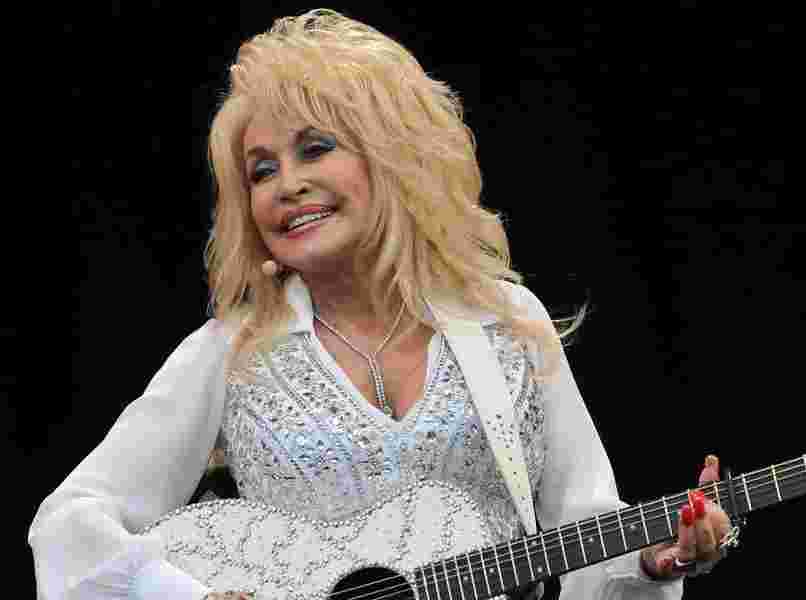
Crucially, she achieved this by subverting expectations of what a female country artist could be. In an industry often dominated by male perspectives, Parton didn't tone down her femininity to be taken seriously; she amplified it. Dr. Tracy King argues that "Dolly helped expand the narrative" of how women could be perceived, showing that one could be simultaneously "the glamorous star, serious songwriter, ambitious decision-maker, owner of her work and a brand manager of her public identity" .
She leaned heavily into her trademark appearance—the big hair, the exaggerated makeup, the sparkling outfits. It was a deliberate act of defiance. Parton "refused to accept the idea that femininity and authority were mutually exclusive" . Her intelligence and business savvy made the prejudices of others visible; as King puts it, Parton used humor to show she was "in on the joke, but she was never the joke" . She transformed what could have been a limiting caricature into a powerful symbol of self-determination.
The Case for the Crown
Dolly Parton's claim to the title of the greatest country singer of her time is supported by a combination of factors that few others can match. Her output as a songwriter is unparalleled in its quantity and quality. Her commercial success, marked by historic chart numbers and iconic crossover moments, demonstrates her mass appeal. Finally, the deliberate way she built her image and empire created a new playbook for artists, particularly women, in the industry.
She did not just sing country music; she defined its possibilities, proving it could be deeply personal yet universally appealing, rooted in tradition yet capable of global pop dominance. While subjective taste will always create debate, her impact, influence, and legacy provide an objective and powerful argument for Dolly Parton's place at the very top of country music's pantheon. NNL.