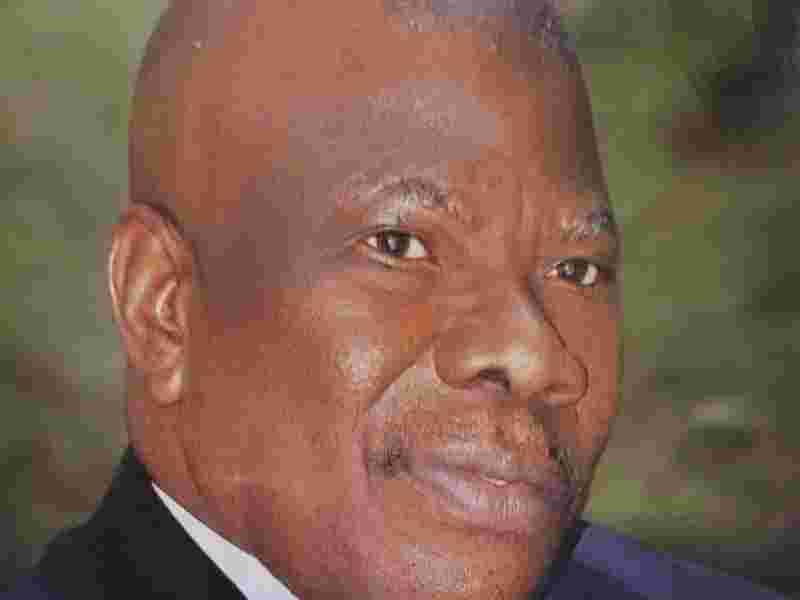



(A Nigerian NewsLeader Editorial, Tuesday, October 20, 2026)
Judicial corruption, prolonged litigation, political interference and the sale of justice threaten the foundations of democracy. Nigeria must urgently reform its courts before public confidence collapses completely.
The warning by retired Supreme Court Justice Amina Adamu Augie that corruption is turning Nigerian courts into “market stalls” should trouble every patriotic Nigerian.
It is a disturbing indictment of an institution constitutionally entrusted with protecting citizens' rights, resolving disputes impartially and ensuring that nobody, regardless of wealth, political connections or social status, stands above the law.
Speaking in Abuja last Saturday, October 17, 2026, during the 40th anniversary of the Nigerian Law School Class of 1986, Justice Augie identified corruption within the Bench, the Bar and court registries, alongside delays, inadequate funding and political interference, as major impediments to justice delivery. She insisted that restoring public confidence requires accountability without regard to seniority or influence.
Augie's intervention deserves serious consideration, not because every Nigerian judge or lawyer is corrupt, but because allegations of compromised judgments, questionable judicial conduct which includes biases, hostility and intimidation of vulnerable litigants by officers at the bench and unequal access to justice have become too persistent for Nigeria to ignore.
A nation where justice is for sale cannot guarantee equality before the law. Already, there is an alarming crisis of confidence.
Nigeria's judiciary occupies a central position in the constitutional arrangement established under the 1999 Constitution. Sections 6 and 36 of the extant nation's law book establish the judicial powers of the courts and guarantee fair hearings, while Section 17(2)(e) requires the independence, impartiality and integrity of the courts to be secured and maintained.
Yet constitutional guarantees cannot protect citizens effectively when the institutions responsible for enforcing them, which is the judiciary, are weakened by corruption, inefficiency or political pressure.
The 2025 World Justice Project Rule of Law Index placed Nigeria 120th among 143 countries, according to figures cited in reporting on Justice Augie's address. This ranking is not a measurement of judicial bribery alone. It reflects wider rule of law weaknesses, including constraints on government powers, corruption, fundamental rights and the administration of justice. Nevertheless, it presents an uncomfortable picture of Nigeria's institutional performance.
The World Justice Project's earlier country data also identified significant weaknesses in Nigeria's civil and criminal justice systems. Its research on access to justice has documented the financial and personal hardships suffered by citizens attempting to resolve legal problems.
Nigerian NewsLeader Newspaper acknowledges that these indicators do not establish that corruption is equally prevalent in every court or judicial division. Certainly, there could be rare exceptions. There is no sufficiently comprehensive, publicly available national dataset establishing reliable corruption rates separately for magistrates' courts, state and federal high courts, the Court of Appeal and the Supreme Court.
That absence of reliable, disaggregated data is itself a problem. The country needs transparent monitoring to distinguish substantiated misconduct from rumour, identify vulnerable institutions and measure whether disciplinary interventions are working.
Commercialisation of justice is not confined to one level of the judicial hierarchy. It can occur wherever an official exploits a position of authority for an improper financial or personal advantage, from the magistrate's Courts to the Supreme Court. At the magistrates' court level, where many ordinary Nigerians encounter the justice system, allegations of unofficial payments, manipulation of case files, questionable bail practices and deliberate postponements deserve particular attention. Court clerks and registry personnel also exercise considerable administrative influence over filing, documentation and access to records.
For a trader seeking the recovery of a debt, a tenant facing eviction or a worker pursuing unpaid wages, even a relatively small unofficial payment can become an insurmountable obstacle. A litigant who cannot afford repeated journeys, legal representation and prolonged proceedings may abandon a legitimate claim.
At the high court level, disputes over land, public contracts, political offices, commercial interests and fundamental rights can involve enormous financial or political stakes. These circumstances create incentives for powerful litigants to seek improper influence. However, the existence of a controversial judgment does not, by itself, sufficiently prove corruption; allegations must be established through credible evidence and lawful investigation.
At the Court of Appeal, the stakes can rise further as parties challenge decisions affecting property, liberty, public office and substantial financial interests. Concerns arise whenever litigants suspect that influence, rather than the evidence and applicable law, determines the outcome.
The Supreme Court, as the apex court, carries a special responsibility. Its decisions on constitutional interpretation, electoral disputes, federalism and fundamental rights can affect millions of Nigerians. A properly reasoned judgment strengthens constitutional government, while a judgment tainted by proven corruption would inflict damage extending far beyond the immediate parties.
Therefore, Justice Amina Augie's account of a dispute involving 12 burnt goats reaching the Supreme Court illustrates the need to examine whether the country's appellate structure directs cases to the appropriate judicial level. It does not establish corruption in that particular case. Rather, it highlights the opportunity cost of allowing relatively minor disputes to consume the time of a court that must determine questions of national constitutional importance.
Corruption is not the only threat to justice. Excessive delay can produce similar consequences, especially when wealthy litigants can sustain prolonged litigation while poorer opponents cannot. That is when delays becomes a denial of justice.
A 2026 investigation by the Foundation for Investigative Journalism, drawing on a database of more than 150 high-profile corruption cases filed since 2005, reported that the 57 decided cases in its review took an average of approximately 6.2 years to conclude. Of those decided cases, 38 ended in outcomes favourable to defendants, while 19 resulted in convictions. These figures concern the cases reviewed, not every corruption prosecution in Nigeria, and an acquittal or dismissal is not proof of judicial corruption.
Nevertheless, prolonged trials weaken deterrence, consume public resources and can allow defendants to escape accountability through procedural exhaustion rather than a timely determination of the evidence. The National Judicial Council has recognised the challenge.
In March 2026, the Economic and Financial Crimes Commission (EFCC) and the Independent Corrupt Practices and Other Related Offences Commission (ICPC) raised concerns about delays in corruption and financial-crime trials during discussions with the Council's Corruption and Financial Crimes Cases Trial Monitoring Committee.
The consequences extend beyond high-profile defendants.
The World Justice Project has documented Nigeria's serious pretrial-detention problem, including the disproportionate number of detained people awaiting trial. Such detention threatens personal liberty, burdens correctional facilities and undermines the constitutional presumption of innocence.
Justice delayed can therefore become justice denied even when no bribe has changed hands.
Judicial independence is meaningless if governments obey court decisions only when convenient. Political interference and disobedient of court orders is a major problem. Justice Augie criticised the disobedience of judicial orders, recalling controversies surrounding the prolonged detention of former National Security Adviser, retired Coloniel Sambo Dasuki and the Islamic Movement leader, Ibrahim El-Zakzaky, despite court orders concerning their release.
Such episodes raise fundamental questions about constitutional government. When public officials disregard binding court orders, citizens receive the dangerous message that executive power can override judicial authority. Political interference may also operate more subtly through appointment and promotion processes, pressure on judicial officers, attempts to influence sensitive cases or selective compliance with judgments.
The judiciary must resist these pressures, but the executive and legislature must also respect constitutional boundaries. A government cannot credibly demand obedience from ordinary citizens while treating judicial orders as optional.
At the same time, judicial independence must never become immunity from investigation. Judges should be protected against political persecution while remaining accountable for proven corruption and serious misconduct.
Nigeria need not invent every element of judicial reform from scratch. Other jurisdictions offer useful lessons, although their institutions and constitutional arrangements cannot simply be transplanted.
In Hong Kong, for instance, Independent Commission Against Corruption, established in 1974, developed a three-pronged strategy combining investigation and enforcement, corruption prevention, and public education. Its experience demonstrates the value of an adequately resourced investigative institution operating independently, supported by preventive controls and public participation. Its own official account attributes Hong Kong's progress to sustained enforcement, institutional checks and community support.
Nigeria should adapt these principles by strengthening cooperation between the National Judicial Council (NJC), the Economic and Financial Crimes Commission (EFCC), the Independent Corrupt Practices and Other Related Offences Commission (ICPC) and other relevant bodies, with clear safeguards protecting judicial independence and preventing politically motivated prosecutions.
Singapore provides another useful institutional lesson. Its Judicial Service Commission exercises defined responsibilities over the appointment, promotion, transfer and discipline of judicial-service officers. Transparent procedures and institutional responsibility help establish clear standards for professional conduct.
For Nigeria, the lesson is not that foreign systems are flawless. It is that credible institutions require clear rules, professional standards, independent oversight and consequences for misconduct. Technology also offers opportunities. Electronic filing, digital case allocation, auditable court-fee payments, secure electronic records and published judgments can reduce opportunities for file manipulation and unofficial payments. But technology must be accompanied by independent audits, cybersecurity and accessible alternatives for citizens without reliable internet access.
NEWSLEADER'S AGENDA PROPOSAL FOR AN URGENT JUDICIAL REFORM
Nigerian NewsLeader Newspaper as a public trust, believes that cosmetic adjustments will not restore public confidence. The country needs comprehensive judicial reform built on seven priorities. The first should be the establishment of a transparent judicial accountability. The National Judicial Council (NJC) and the relevant state judicial service commissions should publish regular, anonymised statistics on complaints, investigations, disciplinary proceedings and concluded cases. Credible allegations must be investigated promptly, with fair hearings and proportionate sanctions. Where evidence discloses possible criminal conduct, appropriate referrals should be made to competent law-enforcement agencies. Neither judicial rank nor professional seniority should provide protection from accountability.
There is also the need to strengthen financial independence. Constitutional and statutory provisions governing judicial funding must be implemented faithfully. Courts should receive timely, predictable allocations, subject to transparent procurement, independent audits and public expenditure reporting. And financial autonomy must serve litigants and institutional integrity, not to become an unrestricted privilege for judicial officers.
However, modernise court administration which are examples in electronic filing, digital case tracking, automated case allocation with safeguards against manipulation, reliable recording of proceedings and online publication of judgments, should become standard. Every payment should be receipted, and court users should have accessible channels to report demands for unofficial payments.
The courts should enforce realistic timelines, discourage frivolous adjournments, strengthen alternative dispute resolution and expand legal aid. There is need to adequately staff and equip Magistrate Courts to handle matters within their jurisdiction, while appellate courts should concentrate on cases appropriate to their constitutional functions. Any reform restricting appeals to the Supreme Court should be made to follow the constitutional amendment process where required and preserve meaningful access to justice. Efficiency should not become an excuse to deny a genuine appellant a fair hearing.
There is also need to reform judicial appointments and promotion. Selection criteria for judicial officers should be transparent, merit-based and consistent with constitutional requirements. Relevant professional experience, integrity, competence and the quality of legal reasoning should also carry substantial weight. Appointment procedures should guard against political patronage and undisclosed conflicts of interest.
Judicial independence and enforcement of judgments should be protected. Governments and public institutions must be compelled to obey binding court orders unless those orders are lawfully stayed or overturned. Parliament should strengthen oversight of compliance, while the judiciary should explain its decisions clearly enough to promote public understanding without compromising impartiality.
There is need to strengthen professional ethics and public scrutiny. The Nigerian Bar Association (NBA), the Body of Benchers, the National Judicial Council (NJC), civil society organisations and the media should promote ethical conduct, monitor justice delivery and support evidence-based investigations. Whistle-blowers as key component of justice administration , should be provided safety and adequately protected, while false accusations and trial by social media must not replace due process.
Nigeria's future depends on more than elections, economic reforms or security operations. It depends equally on whether citizens can obtain impartial justice without buying influence, surrendering their rights or waiting indefinitely for a decision. The courts must reclaim their honour. Every Nigerian irrespective of their status must all be entitled to the same protection of the law. Money should determine neither the speed of a hearing nor the outcome of a judgment.
Justice Amina Augie's warning should therefore become a turning point rather than another headline that fades from public attention. The judiciary urgently needs to confront misconduct within its ranks, the legal profession should discipline its erring members, while governments must stop undermining judicial authority.
Nigerian NewsLeader Newspaper therefore urges the federal and state governments, the National Assembly, state legislatures, judicial authorities, lawyers and civil society to begin a coordinated, measurable programme of judicial reform. The objective must not be to weaken the courts, intimidate judges or subordinate the judiciary to another arm of government, but to protect honest judicial officers, punish proven wrongdoing, make justice affordable and ensure that court decisions command respect because they are reached fairly and according to law.
Our courts in Nigeria should not be a marketplace where justice goes to the highest bidder. It must remain a sanctuary where the powerful are restrained by law and the powerless can find protection. If Nigeria cannot guarantee justice for the poor, the ordinary citizen and the politically unconnected, its constitutional promises will remain incomplete. The time to rescue the judiciary is now. NNL.