(A NewsLeader Weekend Editorial, Saturday October 17, 2026)
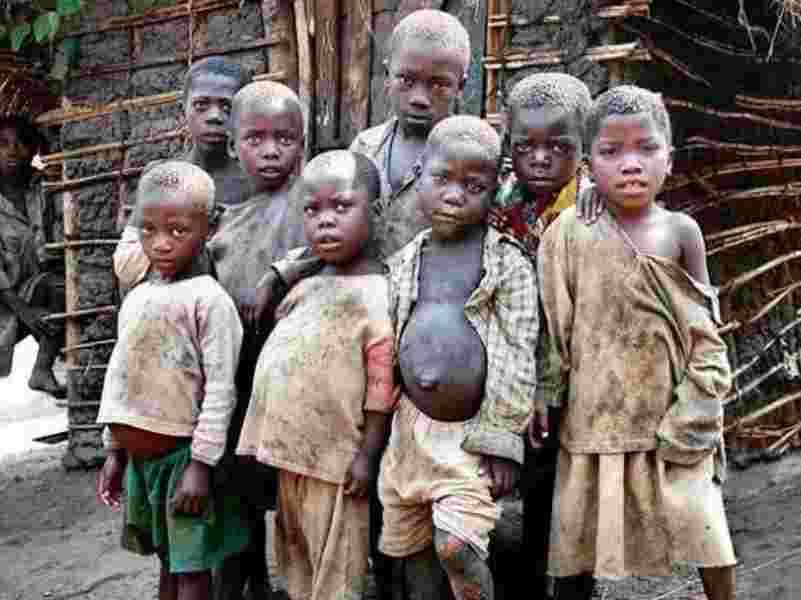
Poverty remains one of humanity's most stubborn enemies, and nowhere is its devastating impact more evident than in Nigeria and much of Africa.
Millions of families struggle daily to secure food, decent shelter, healthcare, education and other basic necessities, even as their countries possess enormous natural and human resources. The contradiction is both troubling and unacceptable.
The observance of the United Nations International Day for the Eradication of Poverty today, Saturday, October 17, 2026, provides another opportunity to interrogate the policies, priorities and political commitments of governments, particularly in Nigeria and across Africa, where the promise of development continues to elude millions of citizens.
The 2026 observance of the International Day if Poverty Etadication is guided by the overarching theme, "United for Peace and Human Rights," with this year's focus on "Safe Homes for All."
The theme emphasises that poverty eradication cannot be separated from human dignity, adequate housing, security and the protection of fundamental rights. A person without a safe and affordable home is often also deprived of good health, educational opportunities, secure employment and meaningful participation in society.
The United Nations estimates that more than 2.8 billion people worldwide experience some form of inadequate housing. The message is particularly relevant to Nigeria, where homelessness, overcrowding, informal settlements, rising rents and inadequate access to clean water and sanitation compound the hardships of low-income households.
Today, is therefore a day for reflection and action against poverty in the world. The International Day for the Eradication of Poverty was formally established by the United Nations General Assembly in 1992. Its origins, however, date to October 17, 1987, when more than 100,000 people gathered in Paris to honour victims of extreme poverty, hunger and violence and to affirm the principle that poverty constitutes an affront to human dignity.
The annual observance of this day is intended to mobilise political will, encourage international cooperation and draw attention to the circumstances of people living in deprivation. It also reinforces the commitment embodied in Sustainable Development Goal 1, which is ending poverty in all its forms everywhere. Unfortunately, the distance between international declarations and the everyday experiences of poor people remains considerable.
According to the World Bank's September 2026 poverty update, approximately 824 million people worldwide lived in extreme poverty in 2024, measured against the international poverty line of $3 a day in 2021 purchasing power parity terms. Sub-Saharan Africa accounted for a disproportionately large share of this population. These figures expose the urgency of the problem. Poverty is not merely a shortage of money; it is a denial of opportunity, security, dignity and the means to build a better future.
Nigeria's poverty burden is wholely unacceptable. The poverty statistics in the country presently should trouble every responsible citizen and public official. The National Bureau of Statistics (NBS) 2022 Multidimensional Poverty Index Survey, found that approximately 133 million Nigerians, representing 63 per cent of the population at the time, were multidimensionally poor. This measure considers overlapping disadvantages involving education, health, living standards, employment-related circumstances and access to essential services.
The survey found that about 86 million of these poor Nigerians lived in the North, while nearly 47 million lived in the South. Poverty was substantially more prevalent in rural communities, where 72 per cent of residents were classified as multidimensionally poor, compared with 42 per cent in urban areas. State level incidence ranged from 27 per cent in Ondo to 91 per cent in Sokoto. These figures must be understood in their proper context. They describe the situation measured by the 2022 survey and should not be presented as a fresh nationwide household survey for 2026.
More recent World Bank estimates nevertheless indicate that the challenge remains severe. Its Nigeria country assessment estimates that more than 60 per cent of Nigerians lived below the national poverty line in 2025. Using the separate international lower-middle-income poverty threshold of $4.20 a day, it estimates that 69.6 per cent of Nigerians were poor in 2025. These figures employ different poverty lines and methodologies and should not be confused with the NBS multidimensional poverty measure.
Behind every percentage are human beings. There are children who attend school hungry and parents who cannot afford prescribed medicines. Same as graduates unable to find decent jobs, farmers whose crops cannot reach profitable markets, and elderly citizens who lack dependable social protection.
Nigeria's problem is not simply that poverty exists. It is that a country endowed with oil, gas, fertile land, solid minerals, entrepreneurial citizens and a large domestic market continues to struggle to translate its wealth into widely shared prosperity.
Africa's poverty is posing a serious challenge to the continent leaders and their people. In the case of Nigeria, her difficulties reflect a wider continental crisis. Although, poverty levels vary considerably among African countries and regions.
The World Bank's March 2026 estimates placed the 2024 extreme-poverty rate in sub-Saharan Africa at approximately 46 per cent, equivalent to nearly 594 million people living below the $3-a-day international poverty line. The estimated rate was 52.9 per cent in Eastern and Southern Africa and 35.7 per cent in Western and Central Africa. These regional estimates are subject to revisions as new household surveys become available.
The figures demonstrate that poverty is not confined to one geographical bloc. Eastern and Southern Africa face particularly high extreme poverty rates, while Western and Central Africa continue to bear a substantial burden. Conditions vary within these regions, and individual countries have recorded progress through economic diversification, social investment and improved access to essential services.
North Africa has a different poverty profile, but it is not immune to deprivation. Youth unemployment, unequal opportunities, housing affordability and pressures on household purchasing power remain important challenges in parts of the region. National poverty lines and economic circumstances however differ.
Across the African continent, conflict, displacement, drought, flooding, food-price shocks and weak infrastructure undermine the livelihoods of vulnerable populations. In countries affected by prolonged insecurity, farmers abandon their fields, children lose access to schools, businesses close and families become dependent on humanitarian assistance.
Africa's challenge, therefore, is not a lack of potential but difficulty of building resilient economies and accountable institutions capable of converting that potential into sustainable improvements in people's lives.
It is however worrisome that poverty has proved so difficult to eradicate. The reasons are numerous, but poor governance and inadequate policy implementation deserve particular attention. The first is that corruption and the diversion of public resources weaken the capacity of governments to provide roads, electricity, hospitals, schools, water and affordable housing. Funds intended for development produce limited public benefit when procurement is manipulated, projects are abandoned or expenditure cannot be properly accounted for.
Also, economic growth does not automatically eliminate poverty. An economy may expand while millions remain unemployed, underemployed or trapped in low-paying informal work. Growth that creates few productive jobs or concentrates wealth among a small section of society cannot deliver broad-based prosperity.
Insecurity has also devastated livelihoods in several Nigerian states. Banditry, kidnapping, insurgency and communal violence restrict farming, trade and investment. Agricultural production cannot flourish when farmers fear for their lives or cannot safely reach their land. Another cause is inflation and the high cost of living which erode household purchasing power. Even when nominal wages increase, families become poorer if food, transport, housing, electricity and healthcare costs rise faster than their incomes.
There is also weaknesses in education, public health, electricity supply, transportation and industrial development limit productivity. A child who cannot obtain quality education or adequate nutrition is less likely to escape poverty as an adult.
Political leaders too often measure success by announcements, budget sizes and completed ceremonies rather than independently verified improvements in household welfare. Poverty-reduction programmes also suffer when successive administrations abandon previous initiatives without evaluating their effectiveness.
NEWSLEADER'S POSITION
Our position in this regard therefore is that action must replace empty promises. The
Nigerian NewsLeader newspaper believes that poverty eradication requires sustained investment, transparent government, productive employment and measurable accountability. Cash transfers and emergency relief have their place, but they cannot substitute for an economy that enables citizens to earn decent and dependable incomes.
The federal and state governments must prioritise job creation through agriculture, manufacturing, construction, renewable energy, information technology and small businesses. Affordable credit, reliable electricity, improved transport and simpler business regulations would help enterprises expand and employ more Nigerians.
Agriculture must become a more reliable source of income and affordable food. Governments should improve irrigation, rural roads, storage facilities, extension services, access to quality inputs and agricultural insurance. Farmers need security, predictable markets and processing industries that reduce post-harvest losses and create value within local communities.
Ppoverty reduction must include a serious housing strategy. Governments should expand affordable housing, strengthen access to basic services, support transparent land administration and encourage responsible public-private partnerships. Social housing must be designed around the incomes of low-income households rather than the purchasing power of wealthy property investors. Secure tenure and protection against arbitrary displacement should accompany investment in infrastructure and urban renewal.
Healthcare and education must receive dependable funding. Primary healthcare, maternal services, vaccination, nutrition programmes and affordable essential medicines can prevent illness from pushing families deeper into poverty. Quality public education, technical training and digital skills are equally indispensable in this collective war or united action against poverty.
Social protection should reach the people who need it most. And cash transfers, school feeding, disability support, pensions and emergency assistance should operate through transparent systems with independent audits, accessible complaints mechanisms and effective safeguards against political manipulation.
Governments must publish poverty-reduction targets and report progress regularly. Independent statistical agencies should also receive adequate resources to conduct credible household surveys. And public officials should explain not only how much money was spent but also how many people secured jobs, improved their incomes, obtained healthcare or gained access to decent housing.
Besides, Nigeria and other African countries must strengthen regional cooperation. The African Continental Free Trade Area offers opportunities to expand markets, develop manufacturing and create employment, provided participating countries improve infrastructure, reduce unnecessary trade barriers and support competitive local industries.
Governments must confront corruption and insecurity with determination. Public money must be protected, public contracts scrutinised and security institutions held accountable. Without peace, justice and trust in government, development programmes will struggle to achieve lasting results.
It is important that the poor must be heard.
The 2026 focus, "Safe Homes for All," also reminds governments that poverty policies must be developed with affected communities, not merely imposed upon them. Low-income families understand the practical barriers that official statistics alone cannot fully explain, which are unaffordable rents, unreliable transport, unsafe neighbourhoods, distant hospitals, irregular electricity and the daily struggle to obtain food.
Governments should therefore consult community associations, market women, farmers, workers, persons with disabilities, young people and civil society organisations when designing poverty-reduction programmes. Their participation can improve targeting, expose implementation failures and ensure that public investment addresses real needs.
The world, therefore, must know that poverty is not destiny. Nigeria and Africa cannot eradicate poverty through speeches, temporary relief packages or ambitious programmes that disappear after political transitions. The task requires sustained economic reform, honest leadership, productive investment, strong institutions and a fairer distribution of development opportunities.
Nigerian NewsLeader newspaper however calls on governments at every level to make poverty eradication a measurable public responsibility. Budgets must prioritise people and development programmes should deliver verifiable results, and the poorest citizens must not be abandoned to hunger, preventable disease and unsafe living conditions.
The United Nations' message this year is clear: safe housing, human rights and peace are inseparable from the struggle against poverty. Nigeria must translate that message into affordable homes, decent jobs, accessible healthcare, quality education and food security.
A nation cannot claim meaningful progress while millions of its citizens struggle to survive. Africa's abundant resources and immense human potential should be instruments of shared prosperity, not reminders of opportunities squandered.
The time has come to end the cycle of poverty, not merely to commemorate it. NNL.