


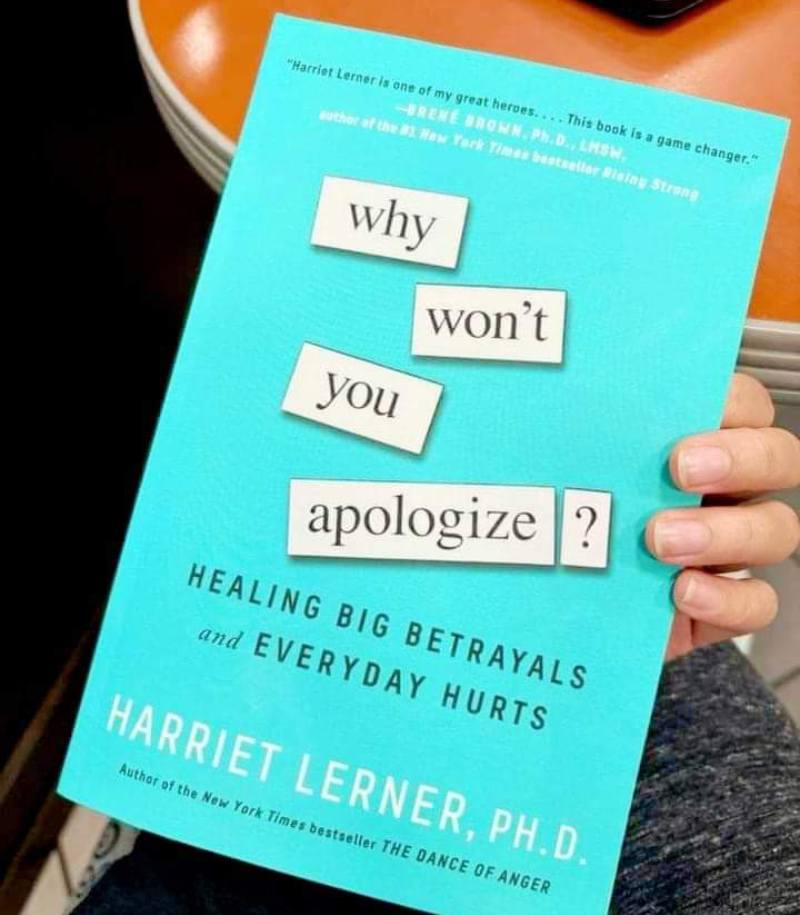
READ THIS BOOK 'WHY WON'T YOU APOLOGIZE?'
By Harriet Lerner
Lessons From "Why Won't You Apologize?"
-
The Power of "I'm Sorry": Lerner explores the immense emotional weight of a genuine apology and its role in VALIDATING your hurt, fostering hope, igniting healing, and eventually, restoring trust. Offering and receiving apologies are crucial for healing and maintaining healthy relationships.
-
Beyond "I'm Sorry": The book goes beyond expecting a simple apology and delves into these deeper needs that arise after betrayal. It reveals that an apology is an acknowledgement of responsibility and the impact of our actions on others. It is also one sure way to show remorse and the desire to repair the damage.
-
The "Non-Apologizer": Lerner explores the psychology behind individuals who resist apologizing, including factors like shame, denial, or difficulty facing their own wrongdoing. This knowledge helps you detach from their behavior and manage expectations, focusing on your own healing journey.
-
The Over-Apologizer: Excessive apologies can also be problematic. The book examines those who apologize excessively, often due to low self-esteem or fear of abandonment. Recognizing this dynamic can help you avoid getting caught in unhealthy codependency patterns.
-
Healing Without an Apology: While an apology is ideal, focusing solely on its absence can hinder your healing. The book offers strategies for healing even if you don't receive one, such as self-compassion, setting boundaries, and reclaiming your narrative by focusing on your strength and resilience.
-
Anger is your friend: Your anger is not your enemy. It signals a violation, fuels change, and motivates you to protect yourself. Lerner normalizes and validates anger as a natural response to betrayal, and offers healthy ways to express and manage it constructively instead of allowing it to consume you.
-
Forgiveness is a Personal Choice: Forgiveness isn't about condoning the act; it's about self-care. Focus on letting go of anger and resentment for your own peace of mind, not theirs. The book challenges the societal pressure to forgive automatically. You decide what forgiveness means and looks like for you.
-
Grieving the Loss: Allow yourself to feel the emotions. Betrayal often involves a loss of trust, safety, or the relationship itself. Acknowledging and grieving this loss is crucial for processing your emotions and moving forward.
-
The Power of Connection: Don't heal alone. Reconnect with supportive loved ones, seek therapy, or join support groups. Sharing your experience and receiving understanding can be invaluable for your emotional well-being.
-
Rewriting Your Story: The power lies in your narrative. Lerner encourages you to rewrite the narrative of betrayal on your own terms, focusing on your strength and resilience. While you do, remember that the experience doesn't define you, but empowers you to become a more authentic and resilient version of yourself. NNL.