- How Geometric And Aba Power Limited Generates And Distributes Light In a Nation Overrun By Darkness For Many Years
By Celestine Okafor (Editor-in-chief)
The time is 9 p.m and the Ariaria International Market should be winding down. Instead, the hum of sewing machines and the glare of fluorescent bulbs tell a different story. Traders who once closed by 6 p.m. because generators were too expensive to run now work deep into the night.
Since 2024, this sprawling commercial hub arguably West Africa’s largest leather goods market, has enjoyed something most Nigerians can only dream of, which is electricity that does not go off.
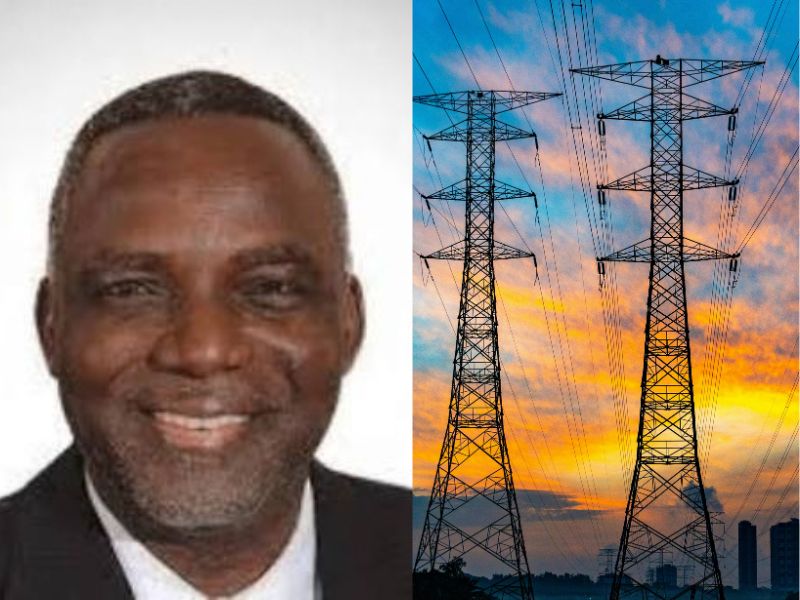
The source of this small miracle is a 188-megawatt gas-fired plant tucked away in the Osisioma Industrial Layout, about 15 kilometres from the market. Built by Geometric Power Limited, founded by Nigeria's former Minister of Power and internationally renowned robotics expert, Professor Barth Nnaji.
The $800 million Aba Independent Power Project is the first fully integrated generation and distribution facility of its kind in Nigeria. Its distribution arm, Aba Power Limited (APLE), serves Aba and eight surrounding local government areas with 24-hour electricity. It is neither a band classification, nor a promise, but a lived reality.
Abia State governor, Dr Alex Chioma Otti, has called it “a landmark investment fuelling the economic growth of the state”. Abia, according to the governor, is elated that coming of Geometric and Aba Power Limited have substantially liberated the state, particularly the Aba industrial and commercial flank from perennial darkness that has stunted industrial and economic growth in the "Enyimba City" state.
A 2025 academic study found that generator usage among Aba industries declined by nearly 60 per cent between 2023 and 2025, while emissions of carbon dioxide, particulate matter, and nitrogen oxides fell by approximately 25 per cent. And for a nation where 90 million people rely on generators and spend $22 billion annually on fuel which is more than the cost of fixing the national grid several times over, Aba is not just an anomaly. It is an indictment.
For several decade years, however, Nigeria has been a nation held hostage by its own power grid. To understand why Aba matters, one must first confront the scale of Nigeria’s power failure.
Since the privatisation of the power sector in 2013, successive administrations in Nigeria have injected over N10 trillion in direct interventions, subsidies, and bailouts. The Central Bank of Nigeria (CBN) alone deployed approximately N2.3 trillion by 2023. A N501 billion bond was fully subscribed in early 2026 to clear the debts of generation companies. And in April 2026, President Bola Ahmed Tinubu approved an additional N3.3 trillion in legacy debt settlement. Not only that, international partners, led by the World Bank, have added more than $2 billion through various programmes. Yet the results are damning.
The national grid has collapsed 105 times in the decade since privatisation. It has crashed down 93 times under former President Muhammadu Buhari administration, and at least 12 times within the first 16 months of President Bola Tinubu regime. Each collapse costs the economy an estimated N42 billion in lost productivity.
Now, the Installed generation capacity stands at roughly 13,625 MW. Yet only about 4,500 MW is actually distributed daily. Energy experts say the gap is explained partly by gas supply constraints. About 75 per cent of Nigeria’s electricity is thermal, and gas producers have repeatedly threatened to halt supply over mounting debts. In Quarter 1 of this year 2026, gas producers announced their decision to halt supply to thermal power plants over an estimated N3.3 trillion owed by GenCos, leading to blackouts in many parts of the country.
The Transmission Company of Nigeria (TCN) insists that its verified wheeling capacity now stands at 8,700 MW, far above any volume of power ever actually generated. On March 4, 2025, the grid transmitted an all-time peak of 5,801.84 MW, delivering a record 128,370.75 MWh in a single day. The problem, TCN argues, is not the wires. It is what happens at the power station fence. The Nigeria Electricity Regulatory Commission (NERC’s) Quarter 1 of 2026 report records that the average available generation capacity across all 28 grid-connected plants was 4,457.96 MW, a figure the Generating Companies ( GenCos) themselves declared.
In other words, the grid can carry more power than Nigeria is currently able to generate. The bottleneck, therefore, is upstream. Gas, debt, and the commercial dysfunction have paralysed the entire value chain.
On the other hand, the electricity Distribution Companies (DisCos) are in serious dilemma. Billions are billed and lost. If generation is constrained, distribution, of course, is where the sector bleeds.
In the second quarter of 2026, Nigeria’s 11 electricity distribution companies (DisCos)
formed during the 2013 power sector privatization, plus a 12th company (Aba Power) added later, generated N603.64 billion in revenue out of N744.67 billion billed to customers, a collection efficiency of 81.06 per cent.
These 11 Discos are the Abuja Electricity Distribution Company, AEDC (covering FCT, Kogi, Nasarawa, and Niger states); the Benin Electricity Distribution Company, BEDC (covers Edo, Delta, Ondo, and parts of Ekiti state); the Eko Electricity Distribution Company, EKEDC (covering Southern Lagos and parts of Ogun State); the Enugu Electricity Distribution Company, EEDC (covering Abia, Anambra, Ebonyi, Enugu, and Imo states); the Ibadan Electricity Distribution Company, IBEDC (covers Oyo, Ogun, Osun, Kwara, and parts of Ekiti, Kogi, and Niger states); the Ikeja Electric, IE (covering the northern and mainland axis of Lagos State); the Jos Electricity Distribution Company, JEDC (covers Plateau, Bauchi, Benue, and Gombe states); the Kaduna Electricity Distribution Company, KAEDCO (covers Kaduna, Kebbi, Sokoto, and Zamfara states); the Kano Electricity Distribution Company, KEDCO (covers Kano, Katsina, and Jigawa states); the Port Harcourt Electricity Distribution Company, PHEDC/PHED (covers Rivers, Bayelsa, Cross River, and Akwa Ibom states, the Yola Electricity Distribution Company, YEDC (covering Adamawa, Borno, Taraba, and Yobe states) and the Aba Power Limited licenced and commissioned as an additional independent distribution network in Abia State.
But the more troubling figure, however, is the Aggregate Technical, Commercial and Collection (ATC&C) loss, which stood at 36.23 per cent. This means that more than a third of the power supplied to DisCos went unpaid or uncounted for, which translates to a cumulative revenue loss of N129.07 billion in a single quarter.
The 2026 Multi-Year Tariff Order (MYTO) set a combined ATC&C target of 16.92 per cent. No DisCo met it. But the Kaduna DisCo posted the widest gap, with an actual loss of 67.70 per cent against a target of 18.18 per cent. In August 2026, NERC dissolved Kaduna DisCo’s board over N456.5 billion in cumulative market obligations, appointing an interim board to oversee a transition period.
The metering gap compounds the problem. As of June 2026, 4.85 million active electricity customers remained without meters, accounting for 38.49 per cent of the active customer base. Without meters, estimated billing prevails which breeds disputes, non-payment, and commercial losses that strangle the entire value chain.
Market remittance performance which is the percentage of upstream invoices actually paid, stood at 93.92 per cent in Q2 2026, which is slightly below the 94.08 per cent recorded in Q1.
But the improvement is marginal, and the underlying liquidity crisis remains unresolved. As of mid-2026, DisCos owed a combined N410.38 billion in upstream invoices, including N326.46 billion to the Nigerian Bulk Electricity Trading Plc (NBET) and N83.92 billion for transmission and administrative services.
In the entire discouraging set up in the Nigeria's electricity sector, erudite scholar and Executive Chairman of Geometric Power and Aba Power Limited, Professor Barth Nnaji, is the man who would not give up. Determination and strong resolve, right from his childhood years when he desired to own a haulage and passenger truck, were in Prof Nnaji's DNA. Against this backdrop of systemic failure, the story of Aba Power is almost improbable. Professor Barth Nnaji, returned to Nigeria with a vision to prove that private, integrated power delivery could work where the national grid had failed. He founded the Geometric Power and began building the Aba IPP.
The plant was completed, but for seven years, the multi-million dollar facility sat idle because “Politics got in the way, human error impacted the project, and it was delayed just as we were about to commission it,” recalls Mrs. Agatha Nnaji, Group Managing Director of Geometric Power. Agatha, a high-heeled management and corporate governance expert, added that "For seven years, we were simply maintaining the facilities that were already in place. We had staff who had to be paid to keep maintaining them”.
Despite this temporary setback, the promoters of Geometric Power kept the plant alive through sheer determination. The Company's Chief Executive Officer, Mrs Agatha Nnaji said her husband, Prof. Barth Nnaji’s commitment to the people of Ariaria kept him going. “For him, it wasn’t merely a financial venture; his drive to see the project through was fueled by a desire to create a lasting, positive impact on people’s lives”.
Geometric Power's breakthrough came when Afreximbank provided a $50 million facility, following interventions by President Goodluck Jonathan and President Muhammadu Buhari. Agatha recalls that “They shared our vision and understood the impact the project would have on the community,” adding that, “Seeing Aba’s potential as an industrial hub in Africa made them far more willing to find a way to make the project work”.
Today, Aba Power operates as an island of stability outside the national power grid.
Governor Alex Otti confirmed in June 2026 that “Aba has an island that includes eight more local government areas, literally out of the national grid. And they have 24-hour power as we speak”.
For Professor Barth Nnaji, there are so many things that must be done. The eminent Engineering Scholar and Roboticist has not confined his efforts to Aba. In a series of public lectures and interviews in 2026 alone, he has outlined a comprehensive reform agenda that policymakers ignore at the nation’s peril.
First, Nnaji urges government to restore Power Purchase Agreements (PPAs) between electricity firms and the Federal Government, which were suspended under the previous administration. Without bankable PPAs, investors cannot secure financing for new generation. Nnaji also enjoined government to settle outstanding debts. He calls for the settlement of approximately N6.8 trillion owed to GenCos and over N200 billion owed to DisCos. The N3.3 trillion approved by President Bola Tinubu in April 2026 is a start, but the scale of the arrears demands more urgent and comprehensive action.
The Geometric Power Chairman also canvassed for the introduction of cost-reflective tariffs to ensure the financial viability of the sector. This is however politically difficult as labour unions and political opponents have blocked every increase for two decades. Without it, the sector will remain trapped in a cycle of under-recovery and under-investment. Nnaji suggested that the country should develop a 765KV national super grid and decentralise transmission operations to prevent nationwide blackouts triggered by faults in a single location.
He advised that Nigeria should harness her vast natural gas reserves. With approximately 210 trillion cubic feet of natural gas and about 75 per cent of electricity generated from thermal sources, gas remains the immediate solution. Nnaji urges authorities to accelerate gas development and encourage embedded generation by distribution companies, the very model that Aba Power has proven.
Professor Nnaji warns that Nigeria requires up to 100,000 megawatts to achieve a higher-middle-income economy by 2040. The immediate-past Minister of Power, Adebayo Adelabu, has echoed this scale of ambition, declaring that Nigeria needs over $100 billion in combined public and private investment across the power value chain to achieve reliable electricity for the nation's consumers.
Nnaji however said that “For the next 20 years, we will be relying on different forms of natural gas to power our economy, and that is a good thing".
The unbundling of the Power Holding Company of Nigeria (PHCN) was a paradox meant to unleash private-sector efficiency. The Electricity Act of 2023 further devolved regulatory oversight to states, with 15 states having completed the transition to state-level regulation as of 2026. Yet the promise remains largely unfulfilled. The Nigeria Labour Congress (NLC) has been scathing.
NLC President and former Labour Editor of the Vanguard newspapers, Comrade Joe Ajaero, declared that “more than a decade after privatisation, the sector remains characterised by frequent grid collapses, poor supply and rising tariffs". He fumed that investors “acquired the DISCOs and GENCOs on a shoestring budget and now expect Nigerian workers to pay for their loans through outrageous electricity tariffs.”
The tariff question, however, remains politically explosive. The Band A classification, introduced two years ago, raised tariffs to N225/kWh for customers promised at least 20 hours of daily supply. The Federal Government insists that there is no planned hike for any consumer band and that subsidies for lower-usage households will continue through the Power Consumer Assistance Fund, a mechanism created under the Electricity Act 2023 to channel subsidies directly to vulnerable consumers.
But for millions of Nigerians, the debate over tariffs is academic. They are paying more for less, and the lights are still going out.
Beyond Nnaji’s prescriptions, several measures are imperative. Energy experts maintain that the gas-to-power value chain has to be addressed holistically. The Federal Government’s inauguration of a gas-to-power monitoring committee, the pundits say, is welcome, but it must be backed by enforceable domestic supply obligations and prompt payment mechanisms. The Nigerian Midstream and Downstream Petroleum Regulatory Authority (NMDPRA) has set the Domestic Base Price at $2.42/MMBTU for the power sector, but uncompetitive pricing and accumulated debts continue to discourage supply.
The power experts also canvass for the strengthening of accountability of the Discos. The Nigeria Electricity Regulatory Commission (NERC’s) dissolution of the Kaduna DisCo board sets an important precedent. There is need for regulatory enforcement to be consistent and impartial. It has also been suggested that metering should be accelerated. The World Bank’s $500 million intervention programme for DisCos should prioritise metering and loss reduction. The Federal Government claims to have metered roughly 60 per cent of active customers, but the gap remains vast.
There is also need to protect the tariff-setting from electoral cycles. As Business Day newspaper has argued in one of it's reports, “Without a mechanism to insulate tariff-setting from electoral cycles, private capital will remain wary”. Besides, the Geometric model needs to be scaled up. The success of Aba Power demonstrates that embedded generation and integrated distribution can work. Other states and private investors should be encouraged to replicate this model, with appropriate regulatory support and financing.
The Aba Power is a light that has refuses to go out. In Aba, the evidence of what is possible is everywhere. Factories in the Owerrenta Industrial Zone are set to receive a new 20MW line with a minimum of 24 hours of daily supply. Landlords and traders speak of rising property values and of longer hours and higher margins. The air is now cleaner in Aba and the generators are also quieter. Professor Barth Nnaji’s $800 million bet did not just build a power plant, it built a proof of concept that demonstrates that the problem at hand is neither technical, nor even financial, but political and institutional. The resources have been spent while the policies have been designed because the technology exists.
Therefore, what Nigeria needs now is the courage to implement the policies and the discipline to enforce it and the political will to put the nation’s lights before short-term political considerations. Until then, Aba will remain a beacon and the rest of the country will remain in the dark. NNL.