• Colors: Cyan Color

By Azu Ishiekwene

Vice President Kashim Shettima cannot be blamed for having doubts about whether President Bola Ahmed Tinubu would renominate him as his running mate for a second term.

By C. Don Adinuba

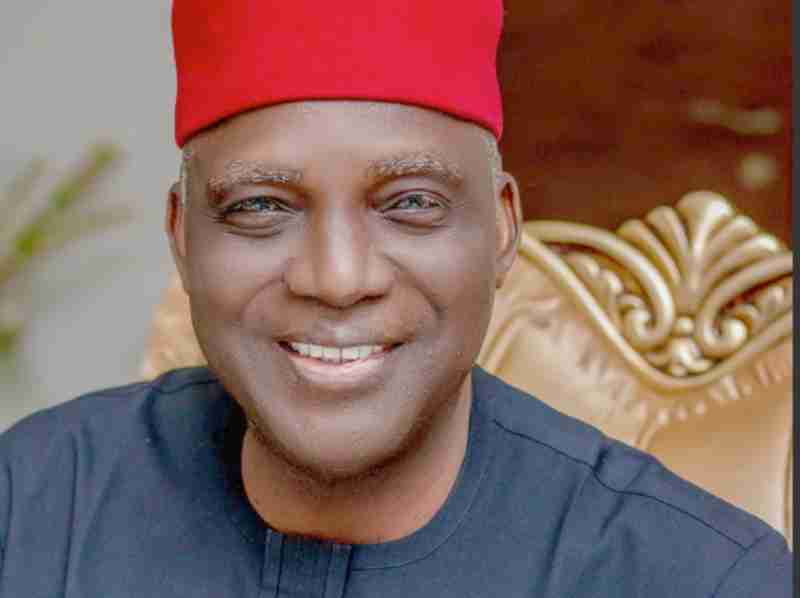
This has been the toughest birthday tribute I have attempted to scribble. A lot of wonderful things have been penned about Bart Nnaji whose birthday both Nigerians from all walks of life and foreigners we are celebrating this weekend in Enugu, and they are true. He is absolutely a wonderful person, near superhuman. World-class achievers are like that, except that many are not as caring and humane and generous and egalitarian as he is.
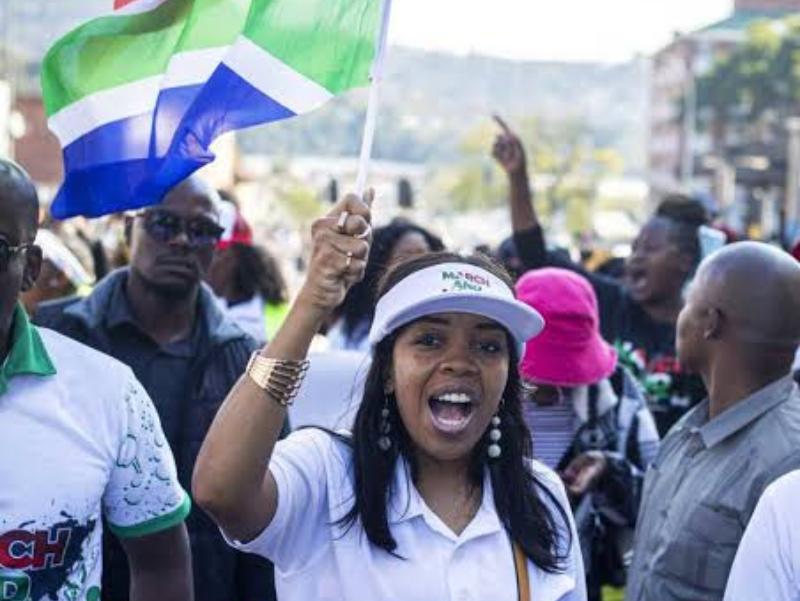
​By Max AMUCHIE | The Sunday Stew

​The Three-Month Sprint was initially conceived as a two-part series.

​In the first part, I journeyed back to the formative moments that shaped my intellectual vocation, from a chance discovery of Sigmund Freud in the University of Calabar Library to the enduring influence of Edward Said and Antonio Gramsci. The essay explored how a journalist's persistent quest to understand why Nigeria persistently bleeds eventually produced three original frameworks that have now entered global scholarly discourse.
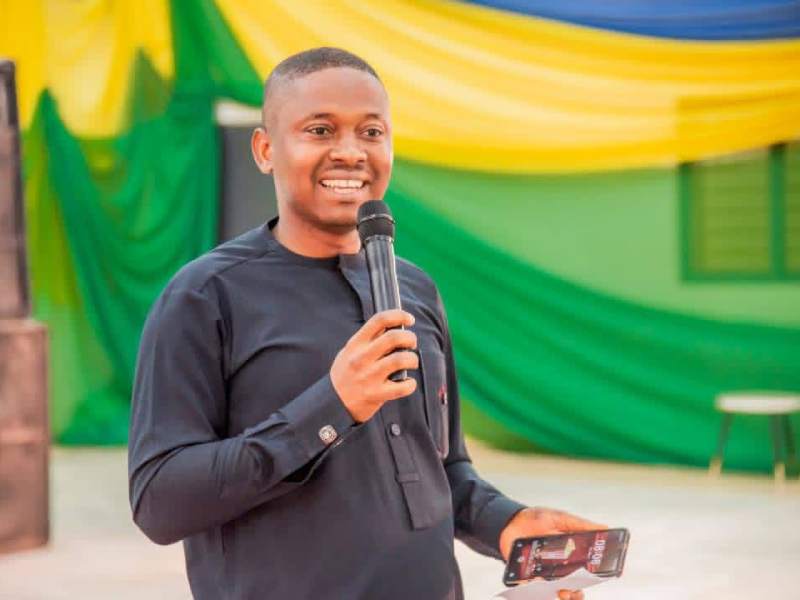
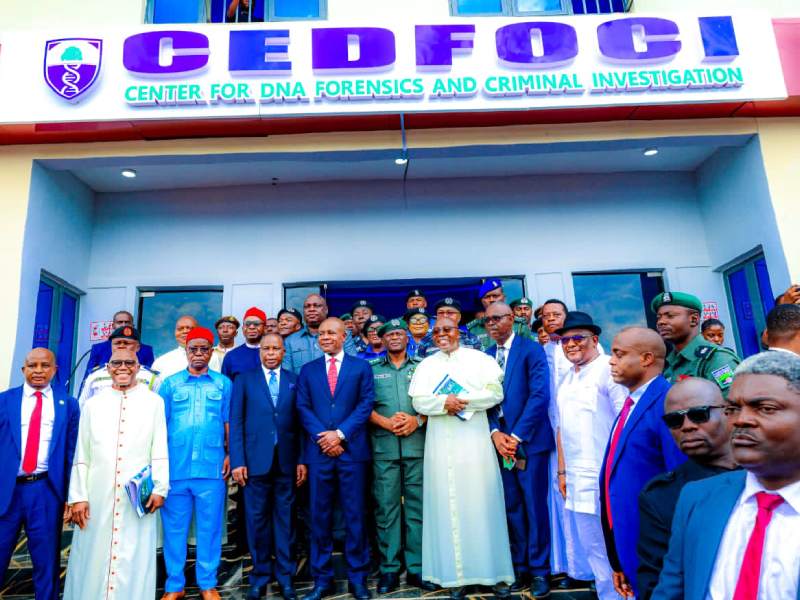
  • How Governor Peter Mbah Is Redefining Security, Justice And The Future of Criminal Investigation In Nigeria

By Dr. Collins Ogbu, Esq.

History is often written not only through elections won or roads commissioned, but through bold ideas that fundamentally alter the trajectory of society. On Wednesday, June 24, 2026, at the serene campus of Godfrey Okoye University, Ugwuomu Nike, Enugu, history found another defining moment.
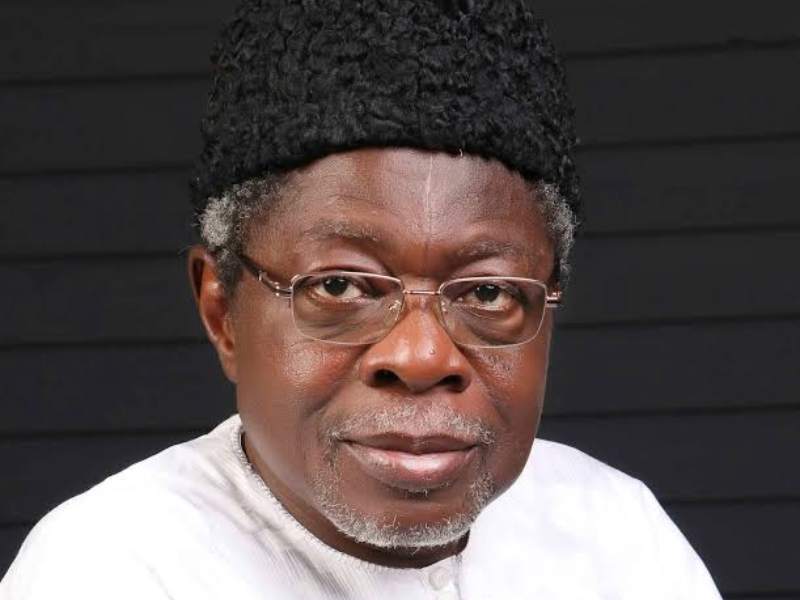
By Hassan Gimba

This is the concluding part of this write-up, originally published on April 25, 2022. Following the publication of parts one and two over the past two weeks, I have revisited this article because its message remains as relevant and timely today as it was when it was first published. Only that it is now: "No one is safe", not only "Nowhere", with generals being killed on the roads (read General Alkali), abducted from their fortified homes (read General Tsafe), or whisked away on highways (read General Rabe), and killed in the bushes, not while on active service or as Prisoners of War (POWs), but as shackled captives.
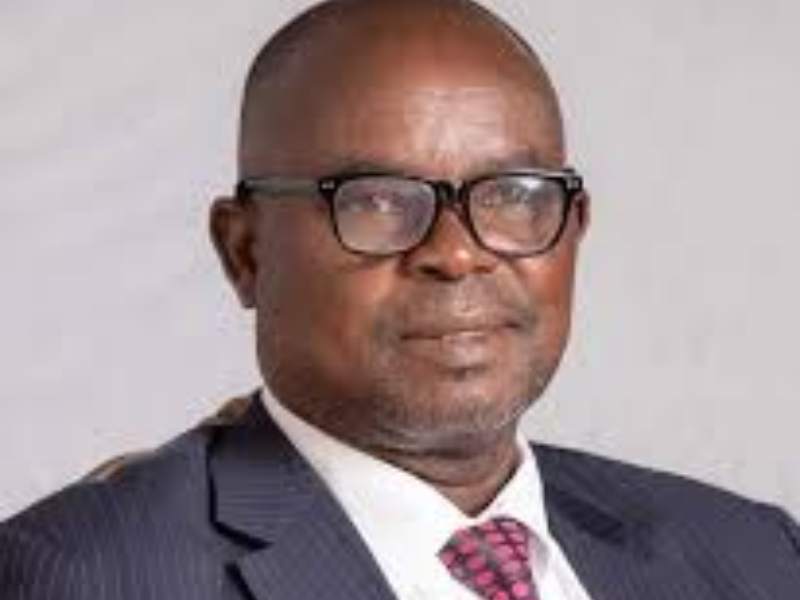
By Bolanle Bolawole

Someone accosted me recently and asked the question: Why are you Yoruba always the troublers of Nigeria? And my mind immediately went to the same question King Ahab had asked Prophet Elijah in the Bible! “And it came to pass, when (King) Ahab saw (Prophet) Elijah, that Ahab said unto him, Art thou he that troubleth Israel? And he (Elijah) answered, I have not troubled Israel; but thou, and thy father’s house, in that you have forsaken the commandments of the Lord, and thou hast followed Baalim” (1 Kings 18: 17 & 18). So, you can guess the answer I gave my accuser who, incidentally, hails for the arch-conservative North.

By Bola Bolawole

Last week, the Ondo State Attorney-General and Commissioner for Justice, Dr. Olukayode Ajulo, OON, SAN, made a very powerful case for state policing, insisting it is the panacea for the insecurity fast enveloping the entire country.

By Azu Ishiekwene

Journalists like to think that the world would be finished without them. Nothing illustrates this vanity more than the joke by my old school journalism teacher that even when the world ends, reporters will be there to tell those in paradise what is happening on the other side.

By Chuka Nnabuife
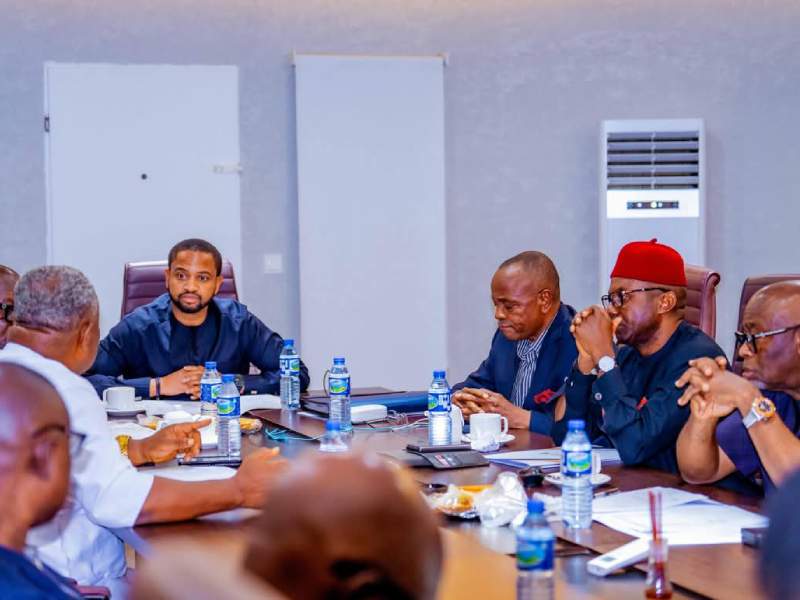
The South East Development Commission (SEDC) is currently weathering a storm.
Following its appearance before a Senate oversight committee on 9 June, the young agency has found itself at the centre of intense public scrutiny. Social media platforms, radio stations and television channels have been awash with allegations, criticisms and sweeping judgments about how the Commission is being run. For an organisation barely two years old, it has been a bruising public relations experience.
Footage from the Senate hearing quickly spread across the media landscape. Viewers watched as the Commission's Managing Director, Dr Mark Okoye, repeatedly sought an opportunity to explain issues raised by members of the committee, only to appear frustrated in his attempts to do so. The result was a public narrative that, in many quarters, seemed to reach a verdict before hearing the full facts.
Beyond the politics and drama, however, there is a more fundamental question: are we being fair to the SEDC?
The Commission was established to drive the development of the South-East, a region that has suffered decades of infrastructural neglect and inadequate federal investment. It is still in its infancy. Judging its entire performance on the basis of one contentious oversight session risks overlooking the broader context.
One of the issues raised at the hearing concerned the release of approximately ₦16 billion from the Commission's 2025 budget, with reports indicating that about ₦12 billion remains unspent. If those figures are accurate, it means only about ₦4 billion had been utilised by the end of May 2026. It is therefore reasonable to ask how such expenditure could automatically be labelled wasteful if it was incurred within approved budgetary provisions.
Another issue involved allegations surrounding a purported ₦153 million office rent. Whether the claim is justified or not, the principle of natural justice demands that the accused party be given an opportunity to respond before conclusions are drawn. Yet public discourse appears to have moved swiftly from allegation to conviction.
Significantly, the Senate committee adjourned proceedings until 16 June to allow the Commission present its position on the matters raised. It would therefore be prudent to await the outcome of that process before declaring the agency guilty of financial misconduct.
What is perhaps most striking is the speed with which criticism has eclipsed any discussion of the Commission's achievements. Since the controversy erupted, commentators have been eager to catalogue what SEDC is allegedly doing wrong. Far fewer have examined what it may be doing right.
Among the recurring criticisms is the claim that the Commission has spent too much time organising seminars, stakeholder engagements and consultations instead of delivering visible projects. While such concerns reflect a public understandably impatient for development, they also overlook an important reality: development is not merely about erecting buildings or constructing roads.
Every credible development institution follows a process. First, it identifies and analyses the problems requiring intervention. Second, it engages stakeholders and establishes priorities. Third, it assesses available resources and develops implementation strategies. Only then does it move fully into project execution, monitoring and evaluation.
These are not abstract academic theories. They are universally accepted principles of development planning. Institutions that ignore these foundational stages often end up with poorly conceived projects, wasted resources and unsustainable outcomes.
A close look at the SEDC suggests that it is still heavily engaged in these early stages. That may explain its emphasis on consultations, stakeholder forums and strategic planning. Such activities may not produce dramatic headlines, but they are often necessary precursors to meaningful and sustainable development.
This is not to suggest that the Commission is above criticism. Far from it.
The recent controversy has exposed weaknesses in its stakeholder engagement and public communication strategy. A development agency operating in a politically charged environment cannot afford to leave its narrative entirely in the hands of critics. The SEDC must do more to communicate its objectives, activities and achievements to the people it was established to serve.
There is also a growing expectation across the South-East for tangible results. Members of the Senate oversight committee expressed frustration at what they perceived as an excessive emphasis on concepts and presentations rather than visible outcomes. Similar concerns were raised during the Commission's budget defence in 2025.
Dr Okoye and his team should take such concerns seriously. Strategic planning is indispensable, but development agencies ultimately earn public confidence through measurable impact. The Commission must increasingly complement its consultations and planning sessions with projects that citizens can see and feel.
Yet even as the SEDC adjusts and improves, it deserves something equally important from political leaders and the public: support.
The South-East has waited decades for a dedicated regional development agency. It would be unfortunate if an institution created to address the region's developmental challenges were weakened before it has had sufficient time to mature.
The Commission should be held accountable. It should be scrutinised. It should be challenged to perform. Those are essential elements of democratic governance and public oversight.
But it should also be given a fair hearing, the opportunity to explain itself, and the space to evolve into the institution the South-East desperately needs. Oversight should strengthen development, not undermine it.
Constructive criticism, informed scrutiny and public support are not mutually exclusive. Indeed, they are all necessary if the SEDC is to fulfil its mandate and justify the hopes invested in it.
For now, the Commission deserves neither a blank cheque nor a public crucifixion. It deserves fairness, patience and the opportunity to prove its worth.
...Chuka Nnabuife, FNGE, FSNA, author and journalist, writes from Awka, Anambra State via This email address is being protected from spambots. You need JavaScript enabled to view it.. 08026472357. NNL.

SEAROUTE POWER Advert: NO POWER No Problem WE ARE The solution to all YOUR power issues Click/TAP TO CONTACT NOW!!!
No NEPA, No Problem SEAROUTE POWER GOT YOU COVERED - click to contact on WhatsApp