• Colors: Cyan Color

By Hassan Gimba

This is the second part of our treatise on the rule of law that started last week. The rule of law is about the creation of laws, their enforcement so that no one - including the most highly placed citizen - is above the law.

By Azu Ishiekwene

It’s not been a merry run-up to Christmas for many Nigerian travellers. It all started with Canada, Saudi Arabia, and then the UK, red-listing Nigeria (and 10 other African countries) for the Omicron variant of COVID-19 in spite of relatively low reported cases.

By Mahmud Isa Yola and Musa Jibril

Arguments about Cannabis can be esoteric for many people, including abusers of the illicit drug. There is a chance of easy comprehension when the discourse is reduced to CBD versus THC contents, two of the plant’s naturally occurring chemical compounds.

By Azu Ishiekwene

I still remember that night like yesterday. Our lives had been turned upside down by the resurgence of the second wave of Covid-19. Like most people, my sleeping pattern was no longer regular; which is to say, out of fear and boredom, I was now learning to sleep before midnight, and waking up without any idea of what to expect.
Sam Nda IsaiahSam Nda Isaiah

On that Friday, I had drifted off to sleep when my son rushed into my room with a phone.

“Dad”, he said, “I think there’s a problem.” I grumbled that except if the world was about to end, there was no problem that could not wait till daybreak.

“I think you should see this, Dad. Sam Nda-Isaiah is dead”.

Sleep disappeared.

It must have been at about one in the morning. I jumped out of bed and grabbed my phone, that little pestilence of the modern age from which we try, without much success, to save ourselves. As I grabbed the phone a thousand thoughts flashed through my mind.

Maybe it’s fake news. Maybe it’s mistaken identity. Maybe it was another Sam Nda-Isaiah. Maybe…

Then I saw that the phone had registered 24 missed calls in about two hours. All of them were familiar numbers, mostly from LEADERSHIP. One was from my friend and outstanding journalist, Louis Odion, who called to say that he had just picked up the news and that Aremo Segun Osoba had called to confirm. I told him I wasn’t sure but promised to call back.

Then the flood of “maybes” suddenly froze into a solid block of fear and panic. I didn’t know what to think or whose call to return first. I didn’t want to believe that I was awake. Maybe it was a bad dream after all?

Instead of dialing, I collected my son’s phone and read the breaking story from an obscure, unfamiliar website. The details were still sketchy but there was a ring of credibility to it. Sam’s name was correctly spelt, and his association with the media and references to his involvement in politics were also correctly cited.

I lingered on in denial, but somehow summoned the courage to dial back one of the earlier callers who confirmed my worst fears. Then I called the second, the third and the fourth previous callers. All confirmed the news. Then, the questions started colliding in my head at dizzying speed. How did it happen? When? Where? What? How can it be true?

Of all the questions, I couldn’t easily get past the how question for many, many reasons. Forty-eight hours before the news broke, Sam Nda-Isaiah had sent me a text - which he did almost daily - to ask my opinion about a set of captions for Ghana Must Go, the popular newspaper back page cartoon strip in LEADERSHIP, which was, quite often, the surrogate vendor of some of Sam’s irreverent ideas! And boy, they were witty, presumptuous, quick-tempered, vivacious, mischievous and funny, just like Sam.

I had, of course, replied with my own suggestions and was waiting for either feedback or any other ideas he might come back with before that Friday night. I had not the slightest idea that anything was wrong with him.

About one week earlier, before I left Abuja for Lagos, he called to ask if I would be available for a meeting to inaugurate the Advisory Board of NATIONAL ECONOMY, a daily business and economic newspaper that he was determined to launch in defiance of the adverse economic conditions in the country, worsened by the global health crisis. The only thing too big, or impossible, for Sam to do was what he did not think about. For him, to think it, is to do it. And to do it, is now. This was obviously another dangerous idea that he was determined to see through.

I told him I would not be in Abuja, that I was done for the year and Lagos was missing me. He replied that my problem was that I overestimated Lagos. He railed about the traffic jam that had messed up his visit. He was in Lagos for the Annual General Meeting of the Newspapers Proprietors Association of Nigeria (NPAN), among other business pursuits, but commuting from one part of the city to the other had become almost impossible.

The traffic jam was horrendous, the sort of chaos for which true Lagosians love and hate the city with equal passion. Sam said he had spent more time in traffic than at all of his scheduled appointments combined, leaving him drained, feverish and irritable. He couldn’t understand my rush into this madness. But he knew he couldn’t save me either. As it turned out, that would be his last visit to Lagos.

I understood his exasperation, but I could never have guessed that it was more than that - the traffic misery of disdainful Lagos visitors. He showed no other signs of distress and gave no hint of being unwell, although he had gained a little more weight the last time I saw him and was complaining of gout and allergies.

On November 2, 2020, Sam Nda-Isaiah hosted the annual editors selection panel of LEADERSHIP to choose the Persons of the Year. He was at his boisterous best, shifting gears between directing and moderating the meeting, to debating suggestions by others while at the same time, pitching his own candidates whom he had penciled in red in his jotter which he looked at from time to time. Sam debated ideas with the feistiness of a professional boxer, never shy to give as much as he was prepared to take in defence of his position.

But that award selection meeting in November was only one of our recent combats. We had a particularly testy one the month before, in the wake of the #ENDSARS riots and the statement of the Minister of Information and Culture, Lai Mohammed, demanding a retraction from CNN for its coverage of the riots and threatening to penalise the station.

I criticised the minister very harshly - and deservedly too - I thought, tracking back to some of his own harsh criticism of the incompetent, knee-jerk reactions of the President GoodluckJonathan’s government when he was in the opposition.

Of course, I had left LEADERSHIP at this time, but I always shared an advance copy of my column with Sam before it was published on the back page of LEADERSHIP, among other syndicated platforms.

Shortly after he got it, he called. “Azu”, he said, “you know I hardly interfere with what people write in their columns, because it’s their opinion. But you’re not just another columnist…” And then he went on to say how he thought the protesters had lost their way and how he believed, very strongly, that Mohammed was right to call out CNN for its tendentious reporting done by rookies and hatchet anchors.

I disagreed with him insisting that multiple sources indicated that there was more deadly official complicity in what happened at the Lekki Toll Gate than the government was willing to admit. Threatening CNN was not the answer.

Neither of us yielded ground and even though it was well within his rights as Publisher not to publish, he ended the encounter by assuring me that the article would run as written, no holds barred.

There were many such testy moments in the nearly two decades that I was acquainted with him out of which I knew him closely and worked with him for five years. Yet not once did a disagreement or feisty debate end in a malicious outrage. It just wasn’t Sam; he was incapable of malice or bitterness. He hollered “very stupid” or “very useless” over a dozen times a day in conversations with this or that errant person, but hardly ever brought himself to cut them loose.

He loved and adored his family, cherished his friends, was gracious to strangers and sacrificial towards all. Sam was a loyal friend. He endured private grief for a few he called “my sons-of-a-bitch” - those who could do no wrong in his eyes, especially a few of his friends in government with whom he had come a long, long way.

He lived his Christian faith in dignified restraint, but wore his patriotism on his sleeve. He could not hide his jealousy for good governance. That was why he did not see eye-to-eye with the PDP government under President Jonathan. He spent acres of his newspaper columns calling the government out, attacking corruption in its rank-and-file and criticising its incompetence, especially at the height of the insecurity that brought the country to its knees.

A memorable line in Sam’s Big Ideas presidential campaign speech was that anyone of the five APC candidates who became president - Muhammadu Buhari, Atiku Abubakar, Rabiu Kwankwaso, Rochas Okorocha or himself - “would be infinitely better than the one we have now.” That one, of course, was Jonathan. And the year was 2014.

But this was Friday, December 11, 2020, slipping into the dawn of another day. Femi Fani-Kayode had not yet seen the light; he had not yet been led by a divine hand back to the APC which, today, is looking far less eligible than the party Sam was excoriating at his presidential campaign speech. Sam would need a bigger tent for his “sons-of-a-bitch.” They have multiplied in one year.

I did not expect to be back here in LEADERSHIP, in my day job. One week before Sam asked if I could wait for him to return to Abuja, I had other plans for the New Year.

And then all of that changed. Sometimes, I stand here, outside the office, looking at where he used to park his car, and wondering if he’s coming late today or not. He doesn’t come. But I see his wife, Zainab, his best friend, fortuitous successor and the legacy matriarch made of steel. I wait for the text messages about Ghana-Must-Go, and they don’t arrive. And I listen for the resonant, heartfelt laughter and passionate debates, but nothing happens.

That Friday night, one year ago, as I sat on the edge of my bed, distraught at the news I just heard, it dawned on me just how much the world can change in the twinkle of an eye. It’s incredible!

...Azubuike Ishiekwene is a renowned Journalist and the Editor-In-Chief of LEADERSHIP Newspaper Group.


By Dr Onjefu Okidu

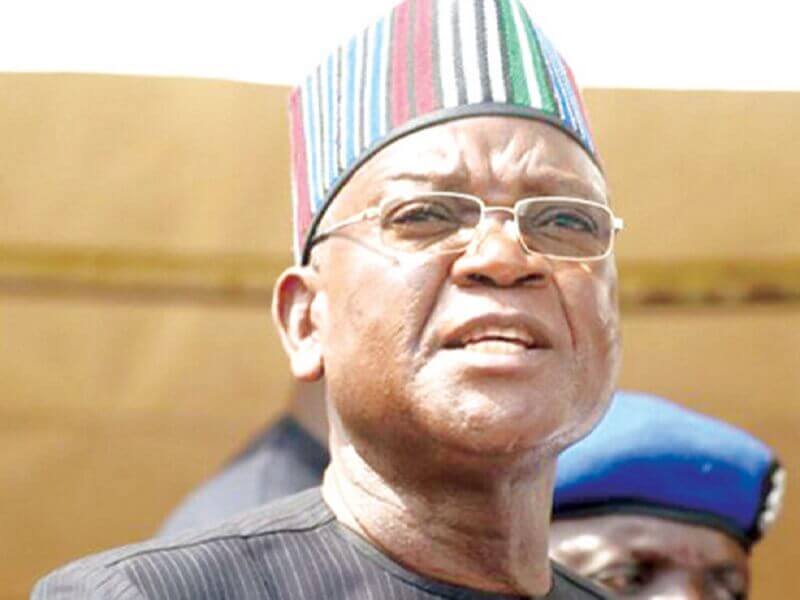
That Governor Samuel Ortom recently swept the entire Makurdi landscape with insult slurs on the entire Benue people is no longer news. In what was seen as a thinly-veiled swipe at an APC bigwig in the state, the Governor under the nose of “God,” precisely in a “church,” struck a blow to whatever it is that energizes his fantasy and obsession with insolence: “if you go round Makurdi town, our people start drinking beer from 9 am and some from there, they will go to sleep, and they come back and insult the governor for not helping them to add value to their lives,” the Governor unequivocally lashed out at the people.

By Jude Ogechi Eze

Today, we'll round off the last part of this topic. I am continuing it against popular demands and persuasion from numerous followers and readers, to discuss either Anambra election or the #EndSARS judicial panel report. Those were current affairs. But this space is not all about current affairs. It inclines more to discourses on topical issues across all sectors of national and international life. I resisted them for obvious reasons.

By Azu Ishiekwene

Last week, the country was engulfed in a mutiny across party lines. After members of the National Assembly surreptitiously inserted a provision in the Electoral Act Amendment Bill calling for direct party primaries, governors, who rarely agree on anything except money, cried foul. They loaded their guns and opened verbal fire on members of the National Assembly for being clever by half.

The governors know what they are doing. The Senate, for example, is their unofficial retirement home and the road to this lair begins with the party primaries. Roughly half of the 22 second-term governors have their eyes on the Presidency or Vice Presidency.

The other half have their eyes on the Senate, where 17 former governors - 12 from the ruling All Progressives Congress (APC), and five from the opposition Peoples Democratic Party (PDP) - are currently cosseted.

They would not get there by sending roses to the party rank and file. Because they know where the dead bodies are buried, the governors reminded the lawmakers that while it may now be convenient to claim that they have seen the light, they were also beneficiaries of the wheeling and dealing of the indirect primary system, whatever its limitations.

Instead of pretending that this electoral ambush is for the greater good of the party rank and file, the lawmakers may as well climb down their high horses, admit that they hope that indirect primaries would save them from the tyranny which they once inflicted on others, and then go and sin some more.

As a matter of strategy, however, senators in their midst have left House Speaker, Femi Gbajabiamila, to champion the cause. The Speaker has spoken eloquently about how direct primaries would broaden party members' franchise and produce candidates who truly reflect the confidence and legitimacy lacking in the prevalent system of indirect primaries.

He has, of course, been silent on the double standards of current beneficiaries who are rooting for a system other than the one that produced them. Or the root of the problem. Things fell apart between the National Assembly members and governors when the latter refused to guarantee automatic tickets for returning lawmakers.

In retaliation, the lawmakers, including Gbajabiamila believed to be interested in the seat of their governors, decided to take their fate in their own hands by striking below the belt.

Kogi State Governor Yahaya Bello has weighed in. He said the problem is not with governors who obviously prefer to retain the indirect system, but with the huge financial burden that direct primaries may place on the Independent National Electoral Commission (INEC), and also, the chances that such a system would put smaller parties at a disadvantage. He did not say how.

The interesting thing about how both sides have framed the debate is their skill at hiding the facts in plain sight. National Assembly members, rooting for direct primaries, want to secure their freedom from the control of state governors who currently maintain a vice grip on the party in the states.

Governors fund the party. They decide who gets on the list of state or federal appointments or who gets what contract or party ticket. The governor is the state and the state is the governor. And when their tenure ends, they bump off any surrogates in the National Assembly who may be occupying their constituency seat and then take their place in the exclusive club.

Indirect primaries lend themselves more easily to abuse and the tyranny of state governors and tin gods who have the party machinery in their pockets. The qualifications of a potential candidate are not necessarily competence, character or vision. It is, on the whole, the ability to pay crooked courtesies among which back-stabbing, bribing, ego-massage, and running odd errands, are premium attributes.

For governors to relent and concede to a more open, transparent system would be to lose control and to hand the field over to their adversaries, when they are currently responsible for nearly 100 percent of party funding.

When Bello - or any of the governors - says, for example, that he is sorry for the extra financial burden or logistical nightmare direct primaries could mean for INEC, that’s only partly true.

Direct primaries, according to some estimates, could increase the commission’s monitoring cost by a quarter, since in the absence of a volunteer culture, INEC would have to send staff to all 8809 wards.

Yet, it would not kill the commission’s officials at other levels of redundancy, who are virtually on holiday for most parts of the year. It will also be putting the cart before the horse to assume that INEC would spend a fortune to monitor direct primaries when we know that the parties have dubious membership registers. In other words, the problem may have been maliciously overestimated.

Multiple sources told me that currently, governors spend between N8 billion and N10 billion to pay delegates during indirect primaries at a going rate of about N1.2 million per delegate. If you multiply that at ward, state and national primaries, you would find that the indirect system is only the lesser of two evils for its rottenness.

Yet, we have also seen from the examples of the chaos of direct primaries in 2019 in APC in Lagos, Ogun, Abuja, Akwa Ibom, Bauchi, Cross River, Kano, Niger, Taraba, Zamfara - and even the recent one that produced Andy Uba in Anambra - how bogus party membership registers were deployed. Our politicians will subvert any system just to produce the results they want.

There are other reasons why it may be a waste of time to split hairs over primaries - direct or indirect. To even get to that stage, a candidate would first have to pass the party’s screening, since only candidates who have been successfully screened can contest the primaries.

As long as party structures are in the hands of governors and party godfathers, all discussions about primaries are a waste of time. And the structures will continue to be in the hands of governors and godfathers until citizens sufficiently mobilise themselves to invest in the parties from the grassroots - schools, markets, clubs, town halls and so on.

It’s foolhardy to pretend that governors and godfathers will fund political parties only to hand them over to their adversaries or idealistic bystanders during elections. It won’t happen.

And there is the risk that the noise over primaries may also drown other important changes made in the electoral act amendment bill. For example, the bill addresses the cost of politics by capping the cost of nomination and campaign expenses and also increases the penalty for vote-buying, an epidemic which makes every election time Christmas time.

The bill settles the legitimacy of the use of biometrics, too. Diverse legal interpretations of the legitimacy of the biometric system have been at the heart of a good number of post-election limitations, perhaps the most rancorous in recent times being the contest between Nyesom Wike v Dakuku Peterside & others.

In its ruling, the Supreme Court set aside the judgement of the court of appeal that the non-use of the card reader, going by INEC’s regulation, significantly invalidated the votes. It was an extraordinary attempt to find a common ground between convenience and pragmatism on the one hand, and the rule of mischief and jurisprudence on the other. The court ended up making a distinction without a difference.

And, of course, in the midst of their turf war with governors over primaries, the lawmakers still managed to concede, in the bill, that however elevated their testosterone levels might be, they cannot share the statutory responsibility for transmitting results electronically with INEC. It was indeed a rare moment of introspection, as they reversed themselves and agreed that INEC could solely and immediately commence this important function.

On the whole, the system of primaries managed to supplant other important items in the bill, not because of its intrinsic value, but because as far as primordial self-interest goes, it offers the biggest nuisance value. But until the internal party structures change - and that means more citizens in the party rank and file putting their money where their mouth is - the noise about party primaries means nothing.

The rebellion is a storm in a teacup.

...Azu Ishiekwene, a renowned Journalist is the Editor-In-Chief of LEADERSHIP Newspapers Group.NNLlol

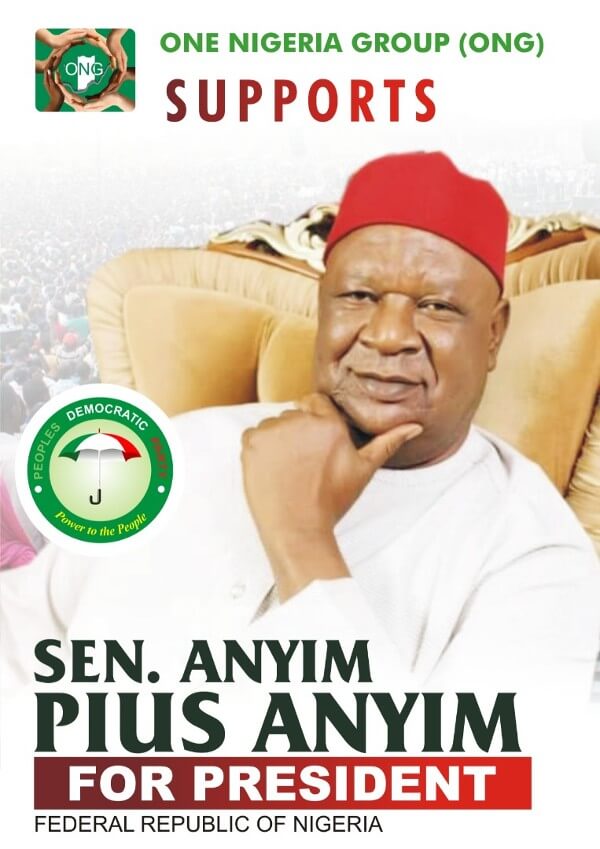
Former Senate President, Senator Anyim Pius Anyim, recently declared his intention to run for the position of President of Nigerian in 2023 general elections. Anyim's declaration was widely seen as an uncommon demonstration of courage which finally put-paid to the public impression that potential Igbo Presidential aspirants are unwilling to openly throw their hats in the political ring for yet unknown reasons.

SEAROUTE POWER Advert: NO POWER No Problem WE ARE The solution to all YOUR power issues Click/TAP TO CONTACT NOW!!!
No NEPA, No Problem SEAROUTE POWER GOT YOU COVERED - click to contact on WhatsApp