• Colors: Cyan Color

By Hassan Gimba

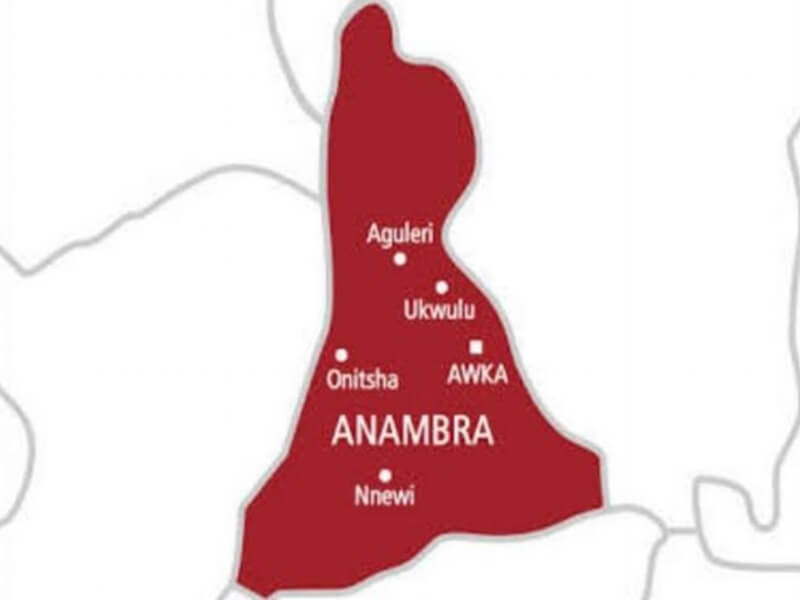
Even though Anambra has been in the kitty of the All Progressive Grand Alliance (APGA) for a long time, the recently concluded gubernatorial election in which Professor Charles Soludo bested other candidates to emerge, winner, is a straightforward case of identity politics.

By Azu Ishiekwene

The cold blast of the air conditioner from the room hit me by surprise as I opened the door. I wasn’t expecting a draught from inside at eight on a damp morning. But there was my cousin under the duvet, hugging what seemed like a pillow as he snuggled diagonally across the bed, deeply asleep.

I grabbed the electric iron from the floor right next to the standing fan, which was purring at a speed that made the room even cooler and left quickly. How could he be sleeping so comfortably with the AC at a cold blast on a wet morning?

As I closed the door, I remembered that this was the sort of thing I used to do not too long ago. Going to bed with the AC in super-chill mode and the standing fan whirring in complement was the cool thing. And whether in the car or at work in the office, I made sure that the atmosphere was super-chilled all the way.

And then one day a friend forwarded an article in the Times of India to be entitled, “AC causes more harm than good.” Under the heatwave baking us night and day, it seemed like a weird thing to say. AC is not only a welcome relief from the heat, it has also become a status symbol.

But the article was an eye-opener. AC, it said, sucks humidity from the air in the room, without discriminating between moisture in the atmosphere and moisture from the skin. That’s probably not so bad if, like my cousin, you’re in your late 20s. But, if like me, you’re in your late 50s and above, the skin is more vulnerable and the AC effect tends to hasten to age.

But AC turned at full blast is only one of the many potential miseries of aging. You would find, as you get older, that there is a lengthening list of don’ts you are advised to observe to live a longer, healthier life.

I used to love sugar like mad. I still remember popping St. Louis cubes, hiding some on the door lintel, or scooping handfuls of Ovaltine powder when mother wasn’t looking.

Occasionally, when my hand was caught in the jar, mother would, apart from administering strokes of fan belt to my buttocks, also give me the Ketrax worm expeller treatment, with Fam-Lax, a common laxative at the time.

I don’t know which one was worse. The lashing was bad and merciless. But the fear of expelling a few live worms as they wriggled their way through my anal canal after surviving the Ketrax attack, was dreadful.

Yet, the punishment, however harsh, didn’t keep me away for too long from Goodie-Goodie, fizzy drinks, ice cream, chocolates, and candies. As I grew older, I began to learn more about sugar and its deadly side effects.

Sugar, no matter by what name it is called - corn syrup, agave nectar, cane juice, or sucrose - is sugar. It can mess up your health, especially as you get older, if not taken in significant moderation which, according to some health experts, is about 200 calories daily from all the foods combined.

According to WebMD, excessive sugar consumption may alter the mood from a “sugar-high” to “sugar crash”, compromise cavity health, worsen joint pain, and trigger molecules that could hasten aging.

Fifteen, twenty years ago, I didn’t care. And why should I? I think by some genetic accident, I have maintained a slim figure that has left friends teasing that I could swallow a mortar and pestle without showing it.

My shopping cart was incomplete without a box or two of vanilla ice cream, to wash down my dinner which could be pounded yam, fried plantain, or amala with egusi and plenty of ponmo, eaten at well past midnight. My ice cubes or a chilled bottle of water was never too far away.

I thought that was life, and that I was young at heart and invincible - until a medical checkup turned out to be a life-threatening scare. After a major surgery, my lifestyle changed significantly.

It’s not the AC, ice cubes, and sugar alone that I have been forced to cut down on or do without completely. I’ve almost shifted 180 degrees from a life of super-chill to one of fresh air and electric fans; and descended from my sugar pyramids to pounds of bitters, fruits, and vegetables - and yes, my salt intake is nearly down to zero.

Not too long ago, I just loved to season my foods all the way, first marinating and then garnishing them with salt, seasoning cubes, and whatever synthetic flavors that could, in my opinion, bring out the real taste.

I ate my boiled plantain or yam with a saucer of palm oil seasoned with salt. During rainy seasons, I snacked on my African pear by first rubbing it in a plate of salt, “to get the taste.” I know many people who still eat an avocado pear with a salt spread.

They’re playing with fire. A nutrition study by Elias Menyanu, Karen E. Charlton, and Paul Kowal, focusing on Ghana and South Africa said, “It has been estimated that 1.7m lives could be saved annually if salt consumption levels were decreased to recommended levels of 5grams per day.”

Unfortunately, low and middle-income countries, including Africa, where over 75 percent of cardiovascular deaths take place also account for the highest consumption of salts, apart from energy-dense and nutrient-poor diets. According to this study, more than two-thirds of African populations attach low importance to dietary salt reduction.

The result in Ghana, South Africa, and many African countries is that the prevalence of hypertension has continued to rise. My transition from the life of a regular Joe living on dangerous dietary habits for years to one of daily struggle with elevated blood pressure in my middle age should serve as an example to those who have ears.

In an effort to repair the damage of the past, I’m surprising myself with a new attitude of dietary curiosity. I read food labels for size, servings, carbs, calories, sodium, and fat, even if it means squinting or running a quick check on my phone to be sure of the health benefits – or risks. It’s tedious, even annoying sometimes. But it’s a small price to pay for redemption.

I stopped jogging, too. I know that there are folks who jog into their late 60s. I honestly did my best to match that record before a much older friend told me to be careful. Don’t get me wrong. There are many good reasons for an active lifestyle that keeps your muscles strong and your bones firm well into old age. But you may need to work with your doctor to find out what is best for you.

If I had any doubts about my older friend’s advice concerning running into my 60s, they were soon settled when tests showed that pushing the limits could have landed me with a runner’s knee or even stress fractures. I have since learned to do my recommended moderate exercise of 150 minutes weekly or 30 minutes five days a week. My grandchildren can vie for the Olympic medals in the marathon! A consolation prize works for me just fine.

There are other lessons I’m learning about aging, too. I used to wear late, irregular sleeping hours like a badge of honor. Not that I was partying or playing snooker late into the night.

My work as a journalist is hostile to early nights. But I managed to worsen the bad habit by reading long past godly hours. I used to say, very proudly, that five hours of sleep was enough for me. And for many years, I indulged in this dangerous fantasy.

When an older friend told me he was decluttering, for example, taking out all the heavy printed stuff and documents he no longer needed, I begged him to send the books to me. I piled on my binge until it became a compound obsession. Of course, my stress level rose and my mindfulness took a beating from poor sleep and insufficient rest.

Yet, aging is not all gloom and misery, especially if you find the right things and do them early.

My wife often jokes that she never quite understood why her mother, who died from diabetes-related complications this year, used to carry “bags” of medicine or fret about sugar and carbs.

My wife was big on fizzies. Not anymore. But that was after she managed to create her own small collection of remedies for past indulgences, with a range of medicines that would make a chemist proud. After her mother’s death, she developed a steely determination to avoid all those things that could inflame her predisposition.

It’s true, as we say, that, “something will kill somebody”. But thanks to improvements in medicine and science, the cause of death doesn’t have to be ignorance, though current studies by actuaries in the UK suggest that even where knowledge is present, inequalities could also be significant factors in life expectancy. Yet, WHO reports that in about nine years’ time, one of six people in the world would be 60 years and older.

Aging mellows you. It even makes you wiser and more forgiving of yourself and others. Depending on how you handle it, it also provides just about enough time for repairs, before you enter the departure lounge.

...Azu Ishiekwene, a renowned Journalist is Editor-In-Chief of LEADERSHIP Newspaper Group.

By C. Don Adinuba

Ihiala has the distinction of being the only local government area in Anambra State where the supplementary gubernatorial election will hold on Tuesday, November 9. Its people have a chance to make history. Not by voting like most other local government areas in the November 6 governorship election but by delivering at least 90% of the vote to the best candidate to lead the emergence of a greater Anambra State, which, with time, will become Africa’s Taiwan. Such overwhelming support will strengthen the hands of the Ihiala people and their leaders to negotiate skilfully with the incoming governor who is, fortunately, a world-class material.

By Hassan Gimba

Yobe is a small agrarian state on the path to becoming great. All those who governed it ensured this. All the past governors, one way or the other, have taken the state beyond how they met it. There have been hiccups here and there, disappointments now and then, but that’s okay; that’s human nature for you, and how anything human grows.

By Jude Eze

Of late, the press in Nigerian has been unfairly blamed by many state actors for the multisectoral tragedies bedevilling the country. Journalists are becoming scapegoats for the failings of the current regime. Pressmen are guilt-tripped at every turn. In fact, the government's stock-in-trade is gaslighting the masses and guilt-tripping the press; which are basic characteristics of despotic regimes thriving on propaganda.

By Onjefu Okidu

Richard Kuklinski was an American silent murderer. He was given the nickname “The Iceman” because he usually put his victims in a freezer after killing them so that investigators could not figure out anything. Cyanide was his best liquid killer because it is very difficult for pathological regents to detect at autopsy.

By Ugorji O. Ugorji

In the Anambra State gubernatorial election scheduled for Saturday, November 6, 2021, no incumbent will be running for re-election. Governor Willie Obiano has done his bit and is getting ready to walk into the sunset of his governorship. He has endorsed a candidate in the name of the formidable Professor Charles Soludo, but I am profoundly doubtful that he (Soludo) would benefit much from that fact.

By Hassan Gimba

When the news hit the airwaves that the federal government had budgeted N6.3 billion to build an airport at Wachakal, in Yobe State, 130 kilometres from Damaturu, the state capital, not a few people were taken by surprise. This is because there is already an international cargo airport, which can serve as a normal airport as well, being built in the state capital.

By Femi Adesina

My first intervention some months back on the war against hard drug use in the country was under the headline ‘Buba Marwa and the Bad Guys.’ And here I come again today, armed with facts on how the National Drug Law Enforcement Agency (NDLEA) has suddenly come alive under its Chairman/Chief Executive, Brig. Gen. Mohammed Buba Marwa, and is giving a bloody nose to traffickers, peddlers, and users of narcotic substances in the country.

Azu Ishiekwene

Vanguard, like many businesses, has had difficult moments and one that I remember clearly was the exit of its iconic editor, Frank Aigbogun, in 1998.

After about seven years at the helm, Aigbogun left behind such a huge pair of shoes it seemed unlikely that revered publisher, Sam Amuka, fondly called Uncle Sam, would easily find a fit.

Toye Akiyode, Aigbogun’s predecessor, had tried to steady the brand from the teething problems of its founding days. Aigbogun built rapidly on Toye’s successes and made Vanguard a household brand, especially favored among women.

After Aigbogun’s tenure as editor, the task of his successor was not only how to consolidate the gains he had made, but also to broaden the appeal of the brand among other segments.

With The Guardian newspaper making strong strides in the South-South and regional hegemony hugely in play, the Vanguard also needed to tap the ancestral roots of its publisher, Uncle Sam, and establish itself as a prominent regional brand.

The poor state of infrastructure and the business model which required every publisher to be a mini-government, owning everything from water supply to printing presses and distribution vans, did not help matters.

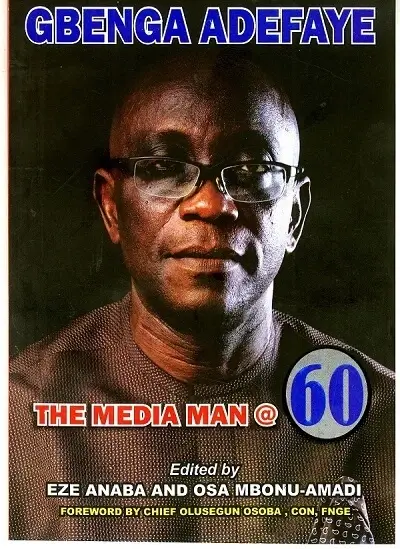
These were the circumstances under which Gbenga Adefaye, was appointed Editor of Vanguard. I didn’t know him well at the time. Also, since I had my own cross to bear as newly appointed Editor of Saturday PUNCH, how people at the Canal managed their storm wasn’t my cup of tea. I would later be forced to take notice and cross swords more than once – a story for another day.

Gbenga Adefaye

Those were truly tumultuous days. The country was in the throes of military dictatorship. Being an editor didn’t only mean producing a newspaper that is commercially successful; it also meant providing a platform that echoed the frustrations of the people and their rising agitation for democratic rule. This was often at the great displeasure of the powers that be.

Vanguard did not flinch. And on Adefaye’s watch, the newspaper grew in stature and reputation emerging Newspaper of the Year and Adefaye, Editor of the Year, more than once. Within a few years of his appointment, Adefaye’s performance had justified his appointment and settled anxious nerves.

His success did not happen overnight.

Back in 1985, he had shown signs of a promising career when he worked as a reporter for NTA Benin. One of the most outstanding DGs of NTA, Professor Tonnie Iredia, who supervised Adefaye in NTA at the time, once told me that Adefaye was “a very serious-minded intern, who took his assignments with dedication.”

He also worked for a brief time at Newbreed, the feisty weekly published by Chris Okolie, but it was at Vanguard that he cut a path for him as a sub-editor.

The sub is often despised and hardly thought of as a place to find editor material. Subs do the dirty job; writers get the accolades. But proprietors who are anxious about standards, especially fidelity to good English, house style, and quality, know that a good sub desk is the backbone of editorial quality.

And I know more than one great editor who emerged from the sub: Henry Odukomaiya, Yakubu Mohammed, Lade Bonuola, Femi Kusa, Doyin Mahmoud, and Najeem Jimoh, to mention a few.

Before computers and robots supplanted the food chain, the sub desk was the factory that regularly produced editorial stars while getting very little, if any credit at all. It was at the Vanguard sub desk that Adefaye’s talent began to show.

If Uncle Sam had any doubts when he chose Adefaye to succeed Aigbogun, subsequent events must have cleared them. In the early late 1990s and early 2000s when the newspaper industry began to face an existential crisis what was required to stay afloat was no longer the regular editorial skill set alone.

In fact, in one of its famous cover stories, Time magazine predicted the “death” of the newspaper. Maybe it was exaggerated. What was clear, however, was that the industry was on the throes of a major crisis. Business as usual was no longer sufficient. What was required was a knack to seize the moment and steer the editorial ship in uncharted waters brought on by the seismic changes in technology.

Adefaye seemed made for exactly this moment. On his watch, Vanguard was transformed from the old bastion of cut-and-paste to cutting-edge technology, making it one of the most commercially successfully digital platforms for Nigerian news. It has remained on this totem pole for years.

And Adefaye did most of this without a fuss: silent water running deep.

We were not very close until my appointment as PUNCH Editor and, later, when we both joined the Guild of Editors as members of the Standing Committee. It was here, working very closely with Adefaye, that I saw, first hand, the depth of his professional commitment and benefited from his extraordinary institutional memory.

Whenever we discussed the shortcomings of the profession and the need to inspire greater public confidence by raising the standard of practice, Adefaye would take the floor and insist that until editors set personal examples, the profession was going nowhere.

The Guild was doing its best, Adefaye would say, but for the profession to regain its prestige and reputation, there was more to be done at the corporate and personal levels. And he would often lace his arguments with rich anecdotes and historical examples.

When there was a vacancy after Baba Dantiye’s presidency, I had no qualms rooting for Adefaye as president of the Guild and helping to execute the “coup” that brought about his successful election.

It’s not for nothing that I call him the “high priest of the cabal”. And in my book, he remains so, many years after stepping down as two-term president of the Guild. He has excellent contacts and has managed to combine the innate stubbornness of an Ife man with the charity of his Christian faith.

If there was ever an argument about who did what in journalism in the last four decades or a grey area to be cleared, you can count on Adefaye to shed the light in an encyclopedic way that almost always settles the matter.

He knows where the saints reside and where the dead bodies are buried. That’s why he is the high priest.

And long may he live!

...Azu Ishiekwene, a renowned Journalist is the Editor-In-Chief of LEADERSHIP Newspaper Group. NNL.

SEAROUTE POWER Advert: NO POWER No Problem WE ARE The solution to all YOUR power issues Click/TAP TO CONTACT NOW!!!
No NEPA, No Problem SEAROUTE POWER GOT YOU COVERED - click to contact on WhatsApp