

By NNL correspondent
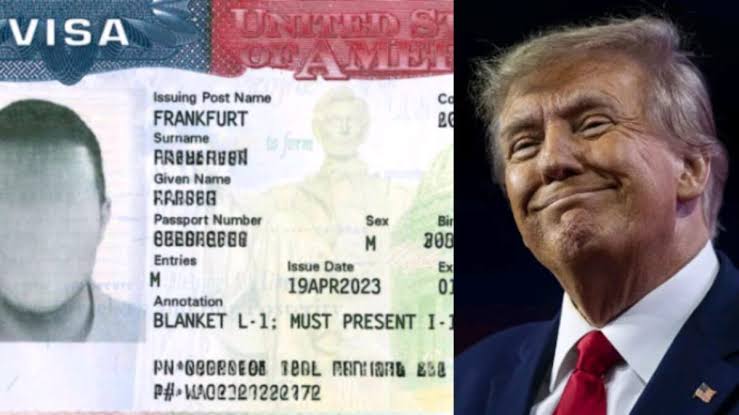
A federal judge in Manhattan has struck down a Trump administration policy that had suspended immigrant visa processing for applicants from 75 countries, including Nigeria, ruling that the measure exceeded the government's legal authority.
The Ruling
U.S. District Judge Jeannette Vargas of the Southern District of New York issued the decision on Friday, finding that the State Department's policy was unlawful and went beyond the powers granted to Secretary of State Marco Rubio under federal immigration law. Vargas, a Biden appointee, wrote that the blanket ban amounted to a direct violation of the statutory framework governing how consular officers evaluate individual visa applications.
Her core objection centered on how the policy operated in practice. Under existing law, an applicant can only be denied on "public charge" grounds — meaning they are considered likely to depend on government assistance — after a consular officer individually weighs factors like the person's finances, age, health, skills, and family circumstances. Vargas found that officers were instead instructed to reject applicants automatically, based solely on their country of origin, regardless of their actual ability to support themselves. She noted that under the policy as written, the result was effectively decided in advance, leaving no real path for applicants to overcome the denial even with strong supporting evidence.
The judge also found the policy violated a 1965 law that prohibits discrimination by nationality in the issuance of visas.
What the Policy Did
The suspension took effect on January 21, 2026, freezing immigrant visa issuance — the category covering permanent residency for people joining family members or taking up jobs in the U.S. — for nationals of 75 countries, representing roughly 40% of the world's nations. It did not affect nonimmigrant visas such as tourist or student visas.
The list spanned a wide range of regions, including much of sub-Saharan Africa, Latin America, the Caribbean, the Balkans, the Middle East, Central Asia, and Southeast Asia. Countries affected included Nigeria, Brazil, Colombia, Egypt, Haiti, Somalia, Russia, Jordan, and Georgia, among many others — including several close U.S. partners.
The State Department said it drew the list from Council of Economic Advisers data, targeting countries where more than 30% of immigrant households received some form of public assistance. Officials framed the pause as part of a broader effort to strengthen vetting and prevent misuse of the U.S. welfare system.
The Plaintiffs
The lawsuit was brought by the Catholic Legal Immigration Network and African Communities Together, joined by individual visa applicants and U.S. citizens whose family-based petitions had been affected. Plaintiffs included six U.S. citizens with relatives in Ghana, Jamaica, Guatemala, and Ethiopia who were blocked from obtaining visas, along with several Colombian applicants pursuing job-based visas — one of whom had already received a denial notice citing the policy.
A Partial Win for the Administration
The ruling wasn't a total defeat for the government. Vargas agreed with the administration on one narrower point: that the policy did not qualify as the kind of formal rule requiring public notice-and-comment procedures before being put into effect.
The Bigger Picture
The decision marks another setback for the Trump administration's broader immigration agenda, which has faced repeated legal challenges throughout 2026. For applicants from the affected countries — and for the American families and employers sponsoring them — the ruling reopens a path to immigrant visa processing that had been frozen for roughly seven months.
It remains to be seen whether the administration will appeal the decision or attempt to rework the policy to address the court's legal objections.