


An editorial excursion into understanding the history, differences and enduring cultural significance of Oguta town’s celebrated New Yam tradition.
By Juliet Nwabiani Okafor (Managing Editor/CEO)
There are moments in the life of a people when the past does not merely live in the books or in the memories of old men. It walks the streets, beats the drums, sings the songs, dresses in strange costumes, gathers families together and summons an entire community home.
In Oguta-Ameshi, in the Orlu axis of Imo West Senatorial district of Imo state, South East, Nigeria, one such moment is the annual summer seasons of "Omerife" and "Ogene" festivals.
For outsiders, the two expressions may appear to describe the same festival. Indeed, even some published accounts of Oguta tradition use "Ogene" and "Omerife" interchangeably. But a closer examination of Oguta's own traditional account and academic studies reveals a more interesting picture. "Omerife" is the wider New Yam and harvest festival, while Ogene Nkirika is one of its opening or preliminary performance stages.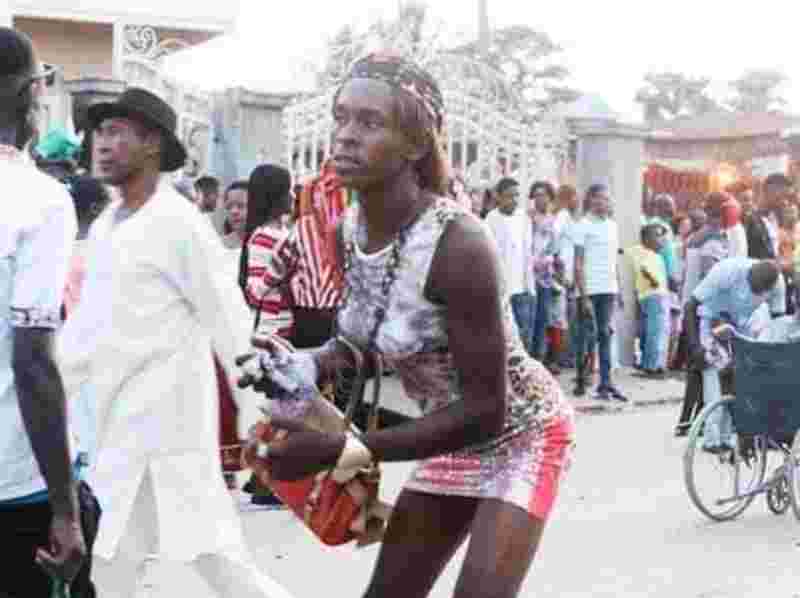
The importance of this distinction is because it reveals that what appears on the surface to be a colourful carnival of music, dancing, unusual dressing and merriment is actually part of a much deeper annual cycle involving agriculture, thanksgiving, family, age-grade organisation, traditional authority, ancestral remembrance and communal renewal. And nowhere is that cultural drama more vividly expressed than in Oguta-Ameshi.
OGUTA-AMESHI: A PEOPLE OF HISTORY AND WATER
Oguta occupies a distinctive position in the cultural geography of southeastern Nigeria. It is the headquarters of Oguta Local Government Area and lies within the Lower Niger drainage basin. Oguta-Ameshi, the historic metropolitan centre, is associated with the famous Oguta Lake, which has long been central to the community's economy, identity and interaction with the outside world.
Traditional accounts preserved in a cultural history of Oguta trace the people's migration to the 16th century, linking their earlier history to the ancient Benin Kingdom and subsequent movements through places including Ilah, Inyi, Igara and Ogbanyi Iberu. The same account points to linguistic and traditional similarities between Oguta and other communities with historical connections to Benin, Onitsha, Aboh and Ogbaru.
Whatever debates may surround particular versions of Oguta's migration history, there is little doubt that the community possesses a highly developed traditional system. Its 27 villages, traditional institutions, age grades, kingship system, family structures and festivals form an elaborate cultural network. The Oguta traditional account identifies Owu and Omerife as the two major festivals of the community. It is within this larger cultural calendar that "Omerife" and "Ogene" must be understood.
OMERIFE: WHEN THE HARVEST BECOMES A COMMUNITY CELEBRATION
At its heart, "Omerife" is Oguta's annual New Yam Festival. Traditional documentation describes it as a harvest-season festival extending from approximately the last week of August into the third week of September. It is fundamentally a period of thanksgiving to God and to the great Oguta ancestors for a successful harvest, accompanied by general merriment and communal fellowship. This is an important point.
The yam is not merely food in traditional Igbo society. It has historically been associated with farming achievement, household prosperity, masculine accomplishment, social status and the ability of a community to feed itself.
Consequently, the arrival of the new yam is not simply the appearance of another crop in the market. It is the symbolic conclusion of a cycle of labour, uncertainty and hope.
The farmer has planted and the rains have come. The weeds have been cleared and the
crops have survived. The harvest has arrived and the community gives thanks. That agricultural philosophy is reflected in the accounts of "Omerife" as a thanksgiving to the divine and ancestral forces for a fruitful farming season. A Nigerian NewsLeader Newspaper earlier report on Oguta's traditional festivals similarly recorded the view of community elders that the harvest celebrations represent thanksgiving for successful planting and harvest.
OMERIFE IS MORE THAN NEW YAM
To describe "Omerife" simply as "New Yam Festival" therefore does not capture its full meaning. It is simultaneously an agricultural celebration; a thanksgiving ceremony; a family reunion; an age-grade festival; a social and cultural carnival; a period of ancestral remembrance; a demonstration of traditional authority and a mechanism for renewing communal relationships.
The traditional account describes a 21-day cycle, beginning from an Afor Ukwu and culminating on Afor Nta. It contains several distinct activities involving families, age grades, traditional rulers, young people and title holders. During the opening days, people return to Oguta from farms, workplaces and other places to reconnect with relatives and age-grade members. Farmers also have an opportunity to sell produce, particularly yam and fish.
The festival thus becomes an annual mechanism for bringing a dispersed population back into one social space. In today's world of migration, urbanisation and diaspora living, that function has become even more significant.
WHERE THE "OGENE" COMES IN
This is where the distinction becomes fascinating. The traditional documentation describes Omerife as having two broad stages: the Okika Omerife, also called Ogene Nkirika and the Etiti Omerife, which is the Omerife Proper.
Academic research independently supports this interpretation. Chinyere Lilian Okam's study of Ogene-Nkirika in Oguta describes Omerife as the New Yam festival and identifies Ogene-Nkirika as the first part of the two-tiered festival. Therefore, when people ask about the "difference between Omerife and Ogene" in Oguta, the answer is not that they are completely unrelated festivals.
Ogene Nkirika is better understood as a major performance component of the wider "Omerife" festival cycle. This explains why some Oguta people and some reports call the entire New Yam celebration "Ogene" while traditional and academic descriptions distinguish the component ceremonies.
OGENE NKIRIKA: THE FESTIVAL OF FREEDOM, SATIRE AND THE UNEXPECTED
If "Omerife" represents the solemn harvest, thanksgiving and renewal, Ogene Nkirika provides the spectacular opening of the cultural theatre. The traditional account says participants dress shabbily or unusually and move along Ameshi Road, from Ngegwu Village towards Umuachishi, performing improvised plays, impersonations and displays of physical strength. Men may plait their hair and dress as women. This is one of the most striking aspects of Oguta's cultural heritage.
During ordinary life, society is governed by rules of dress, age, status and behaviour.
During Ogene Nkirika, some of those boundaries are temporarily turned upside down. The man may become a woman. The ordinary person may impersonate a prominent personality. The serious becomes comic. The young becomes a performer. The street becomes a theatre. And the entire community becomes an audience. The result is not merely entertainment. It is a temporary social space in which society can laugh at itself.
THE STRANGE CLOTHES HAVE A PURPOSE
The unusual dressing associated with Ogene Nkirika has sometimes caused outsiders to dismiss the event as mere youthful revelry. That would be an incomplete reading. The traditional account specifically identifies the unusual or shabby dressing, impersonation and improvised performances as characteristics of the event. A 2018 academic study goes further, examining conflict and change within Ogene-Nkirika performance and arguing that the performance can function as a vehicle for social change.
This is important because traditional festivals often contain mechanisms for social commentary. Comedy permits people to say what solemn occasions may not permit. Impersonation allows society to examine its own leaders and institutions.
Ridicule can expose excesses. Performance can preserve historical memories. And temporary disorder can ultimately reinforce social order by allowing tensions to be released within a culturally recognised framework.
In Oguta's traditional account, what is said or improvised during Ogene Nkirika is described as being protected from litigation — an indication of the exceptional licence traditionally given to performers during the celebration. That is a remarkable cultural institution.
THE GONG, THE DANCE AND THE STREET
The word ogene is also associated in Igbo culture with the traditional metal gong, an instrument whose sharp, penetrating sound has historically been used for communication, music and ceremonial occasions. Thus, the soundscape of Ogene reinforces its communal character. The gong calls. The drum responds. The dancers move. The spectators gather. The street becomes a stage. And the town temporarily transforms itself into a theatre. This explains why Ogene Nkirika has developed an attraction extending beyond Oguta itself. Historical descriptions of the festival note that spectators have travelled from different parts of Nigeria to witness its unusual performances.
OMERIFE PROPER: WHEN THE CELEBRATION TURNS HOMEWARD
After the exuberance of Ogene Nkirika comes the deeper and more solemn dimension of "Omerife". The traditional sequence records a return to town as the principal festival approaches, with age grades, families and traditional authorities taking central roles. Young people dress in their finest traditional clothes and dance around the town.
Then comes the New Yam ceremony itself.
The Ezeigwe (Oguta town's traditional monarch) celebrates the new yam, accompanied by traditional thanksgiving and offerings, while other senior traditional authorities also mark the occasion. The wider community is invited to participate in the feast. This is the point at which the meaning of the festival becomes unmistakable: the community is celebrating survival, productivity and continuity.
FROM THE PALACE TO THE FAMILY COMPOUND
One of Omerife's greatest strengths is that it does not belong exclusively to the palace. The Ezeigwe has a central role, but the festival reaches down through the entire social structure. Traditional rulers participate, including the village heads, family heads, age grades and young people.
Families entertain relatives. Visitors return home. And the wider community shares food and fellowship.
The year 2026 edition of "Omerife" season again demonstrated this decentralised character. In September 2026, for example, Damanze Obi Ossai of Umuoga Kindred in Ngegwu Royal Village celebrated Omerife with traditional personalities, family members and guests. The celebration included food, drinks and traditional slaughtering, and formed part of the wider "Omerife" activities continuing across Oguta. That contemporary example shows that "Omerife" is not simply a palace ceremony. It is replicated at family, kindred, village and institutional levels.
ANCESTORS ARE NOT FORGOTTEN
Perhaps one of the most profound aspects of Omerife is its relationship with the ancestors. Traditional Oguta accounts describe family heads preparing firewood at their compounds for ancestors believed to be returning during the festival period. Whether interpreted literally as traditional belief or symbolically as ancestral remembrance, the message is powerful:
the living do not celebrate alone.
Those who came before are remembered as part of the community's continuing story. The festival therefore creates a bridge between generations. The grandfather who farmed the land and the father who harvested the yam. The child who is learning the tradition. All become part of one historical continuum.
THE FINAL ACT: "KILLING THE DEVIL"
The conclusion of "Omerife" is itself remarkable. The traditional account identifies the final official day as Afor Ogbube Ekwensu, associated with the symbolic "killing of the devil." Members of the Igbuu/Ogbuagu society participate, with the Ogbuagu using a sword to cut a pumpkin into four pieces at the Oguta Lake waterfront. This act symbolically represents the destruction of the evil, after which the participants return home, rejoicing and dancing. It is a powerful cultural ending.
The festival began with the anticipation of harvest. It moved through comedy, music, reunion, thanksgiving and feasting. And culminated in a symbolic victory over evil.
Thus, the agricultural year closes not merely with food in the stomach but with an affirmation of communal wellbeing.
OMERIFE AND OGENE: THE DIFFERENCE AT A GLANCE
The wider annual New Yam/harvest festival is a major preliminary performance stage within Omerife. It primarily celebrates harvest and thanksgiving, and also characterised by performance, satire, music and spectacle. It has religious, agricultural, social and communal dimensions. It also has strong theatrical, humorous and social-commentary dimensions, and involves traditional rulers, families, age grades and the wider community.
The event is especially prominent among young performers and street participants
Including the formal New Yam celebrations.
This precedes the main Omerife celebration
associated with thanksgiving to God and remembrance of ancestors. It is also
associated with unusual costumes, impersonation and improvised performances
and extends over a broader festival cycle which traditionally forms the opening/preliminary portion of that cycle.
This distinction is supported by Oguta's traditional documentation and academic research, although popular accounts sometimes use "Ogene" as another name for Omerife generally.
WHY THE CONFUSION IN NAMES?
The apparent contradiction in descriptions is itself part of the cultural story. A 2021 Nigerian NewsLeader Online Newspaper report described Omerife as also being called Ogene, while distinguishing two forms — Ogene Oma and Ogene Nkiririka. Other accounts similarly describe Ogene as closely connected to the "Omerife" season. This means that "Ogene" can function in two senses in discussions of Oguta culture:
a general popular reference to the New Yam/Omerife celebration and
a specific reference to Ogene Nkirika, the distinctive preliminary street performance.
It is more accurate to state that "Ogene" Nkirika is part of the "Omerife" festival cycle rather than presenting "Omerife" and "Ogene" as two entirely separate and unrelated festivals.
A CULTURAL UNIVERSITY WITHOUT CLASSROOMS
There is another reason these festivals matter. They are schools. The child learns the names of ancestors. The young person learns the songs. The age grade learns its responsibilities. The family learns the obligations of hospitality. The farmer displays the fruits of his or her labour. The community remembers its traditional rulers.
The visitor discovers Oguta's identity. In this sense, "Omerife" is a form of indigenous cultural education which transmits knowledge without textbooks. It teaches history without examination halls; teaches the citizenship through participation. And it gives the younger generation a practical encounter with traditions that might otherwise disappear under the pressure of modernisation.
THE ECONOMIC AND TOURISM VALUE
There is also a significant economic dimension. Festivals bring people home.
When people return from Lagos, Abuja, Port Harcourt, Owerri, overseas and other locations, they spend money on transport, food, accommodation, entertainment, clothing and other services. Farmers market yams, fish and other produce. Food sellers benefit. Musicians and performers benefit.
Photographers, videographers and event organisers find work. The wider hospitality economy also receives visitors.
Research on tourism in Oguta has specifically identified "Omerife" and "Ogene" Nkirika among the community's age-old cultural festivals capable of attracting visitors, alongside masquerade displays and other cultural activities. For a town already endowed with Oguta Lake, therefore, cultural festivals could become an important part of a properly organised heritage-tourism economy.
THE CHALLENGE OF MODERNITY
But the survival of a tradition should not be confused with preserving every element unchanged. Academic research into Ogene Nkirika has documented tensions involving younger participants and questions about how the festival is conducted and understood in contemporary society. That is a legitimate challenge for Oguta town (a.k.a Obodo Girigiri).
How can the community preserve the historical meaning of the festival while accommodating Christianity, modern education, changing social values, technology, security concerns and the expectations of younger generations? How can traditional performances remain meaningful without becoming merely a tourist spectacle? And how can commercialisation be controlled so that the cultural soul of the festival is not lost?
These are the questions that Oguta's traditional institutions, town union, age grades, cultural organisations and younger generation will increasingly have to confront.
FROM OGUTA TO THE WORLD
The answer may lie in documentation and responsible cultural promotion. Oguta should document the history of "Omerife" and "Ogene" Nkirika through oral histories, films, photographs, academic research and properly curated archives. Schools in Oguta could teach aspects of the community's cultural history. Young people could be trained in traditional music, dance, costume design and festival documentation. The annual festival could be developed into a structured cultural-tourism event while preserving its traditional core. And the Oguta diaspora could become an important partner in bringing the festival to a global audience.
For a community blessed with a famous lake, illustrious citizens renowned across the globe, and an unusually rich traditional system, culture can become not merely something to remember but an economic and educational asset.
THE FESTIVAL THAT BRINGS OGUTA HOME
Perhaps the greatest significance of "Omerife" is not the yam itself. It is homecoming. Every year, the festival reminds the Oguta person that no matter how far he or she travels, there remains a place called home. There are family compounds waiting;
ancestral histories to remember; age grades to meet; traditional rulers to honour; old friends to embrace; food to share; music to hear; community to renew and before the celebration finally ends, there is the symbolic victory over evil. "Ogene" Nkirika supplies the laughter, theatre, satire and youthful exuberance. "Omerife" supplies the harvest, thanksgiving, ancestry, family reunion and communal renewal.
Together, they tell the story of Oguta-Ameshi in a language older than modern politics and more enduring than contemporary fashion.
They tell a story of land, labour, harvest, ancestry and identity. And in an age when globalisation threatens to flatten the distinctive cultures of smaller communities into a common popular culture, the continuing celebration of "Omerife" and "Ogene" in Oguta is a reminder that a people who preserve their festivals preserve part of their history.
The gong may eventually fall silent after the last dance. The new yam may eventually be consumed. The visitors may eventually return to their cities. But the memory of the festival remains — waiting for another harvest, another homecoming and another generation to carry the story forward. NNL.